How funny is Fargo?
Spoilers for a half-dozen Coen brothers films.
A couple newsletters ago, when I was discussing movie titles, I mentioned Fargo, and I'll take any free-associative excuse to think more about Fargo. I had somehow not realized until now that in their first seven movies (their 80s and 90s filmography), the Coen brothers featured kidnapping as a main plot point three times. That's 1987's Raising Arizona, 1996's Fargo and 1998's The Big Lebowski. Unless I'm forgetting something, they wouldn't return to abductions until Hail, Caesar!, in 2016.
They wrote other stories where characters get taken, thrown in the backs of cars, locked in rooms (Mink goes missing in Miller's Crossing, the three guys in O Brother, Where Art Thou? escape from jail and then one of them is recaptured) but as far as kidnapping being the plot's driving force, Raising Arizona, Fargo and The Big Lebowski form the Coen brothers' "somebody took somebody" trilogy.
It makes sense for kidnapping to be featured so heavily in their stories. They love James M. Cain and Dashiell Hammett, these hardboiled detective writers putting together lean plots where desperate people blackmail each other into mutually-assured destruction. They also love human error. Kidnapping is a good combination of the two– a horrible crime that features enough players to allow for wild mistakes and left turns. That kidnapping is central to two of their funniest movies (Raising Arizona and The Big Lebowski) and that it's essentially a victimless crime in each of those situations is more unique. In Raising Arizona, Nic Cage and Holly Hunter kidnap a baby and then return him when things get hairy. As the journey wraps up, the baby's father realizes what's happened but has enough sympathy for the couple to let them go, no questions asked. Spoiler alert for The Big Lebowski: She kidnapped herself, man. In what plays like a parody of the tangled conclusions of Raymond Chandler stories, nearly every character we've met is a red herring with respect to the ostensible mystery and the kidnapping victim, Bunny Lebowski, was just off having fun in Las Vegas for a few days.
Fargo's the one that's played closest to my own primal fear of how an abduction would feel. It's also hard for me to gauge how it's intended. I've never seen Fargo in theaters, but I have watched it with ~30 other people, and the vibe in that room was that the scenes with Kristin Rudrüd's kidnapping victim Jean Lundegaard were funny. I'm open to the idea that I'm not taking these films as everybody else is. I'm open to the idea the Coens made a trilogy of funny kidnapping movies and that the middle entry, Fargo, while less goofy than Raising Arizona or The Big Lebowski, is still supposed to play silly. I'm absolutely not calling anybody who laughed at any part of Fargo "deranged" or "amoral," and I'm certainly not judging them in any way.
The goofiness gets into an issue with the Coen bros' tone, which is that they don't have an issue with tone, it's just that none of us can talk about it. Some of their darkest work is also their funniest, but that doesn't mean every moment is supposed to be funny, or at least funny in the same way. The Man Who Wasn't There is probably the tensest thing they shot, but Billy Bob Thornton wondering aloud about hair makes me laugh. I recognize that the movie's end, when Thornton gets the electric chair, is cosmically ironic, but I don't love watching him die. I'm not giggling when it happens. Barton Fink's hilarious, but I also find John Goodman's big, fiery reintroduction into the movie terrifying. I find the purgatory Barton's in at the film's end genuinely sad.
Maybe we can just call take the easy route and call this tone "weirdness." In Fink, it's goofy when Turturro says "We're men, we wrestled," it's weird when John Goodman hands him a package that probably contains Judy Davis' head. In Fargo, it's silly when Steve Buscemi tries to get Peter Stormare to have a conversation with him, it's weird when Rudrüd bursts through a shower curtain and falls down a flight of stairs. But when people talk about Fargo, they seem to overstate how much of it is funny. When the Coens make a dark comedy, it's both darker and more comedic than what I'm used to that that tag being connected to. They never fully pick a side, which keeps any of their movies from becoming a morality play, and that makes the work complicated enough that you get people describing Fargo's woodchipper scene like it's some outrageous comic set piece, i.e. the famous scenes where Christian Bale murders Jared Leto while discussing Huey Lewis in American Psycho and John Travolta accidentally blows Phil LaMarr's head off in Pulp Fiction. Fargo's jokes are mostly odd, but they're rarely winky like those two examples. Can we sit with the discomfort they create without forcing out a few laughs?
In some ways, this is me fruitlessly searching for sincerity in insincere art. Unless it's Sam Raimi-level Looney Tunes slapstick carnage and/or it's directed at somebody the movie has gone far out of its way to argue is deserving of being maimed, it's hard for me to not have a visceral reaction to realistically photographed murder, kidnapping, etc.
Relatedly, dark comedy, like all comedy, is usually either quick or especially drawn out. It's easier to laugh at something horrible when part of the joke is either "Surprise, bet you didn't see this coming!" or "Can you believe how uncomfortable we're trying to make you right now? Okay, time to pile on a little more!" The Coens have gone in both directions, but Fargo maintains pretty much the same pace throughout, meaning everything is given equal gravity, meaning William H. Macy's scene bickering with customers are just as matter-of-fact as the one where he rehearses reporting his wife's disappearance.
As a fan of narrative art, I also generally prefer to see innocent, good-hearted characters get what they want. I find Fargo's whole John Carroll Lynch duck stamp competition moving. Are we supposed to be condescending to his disappointment at getting the 3-cent stamp? Because to me, when Frances McDormand comforts him, it's beautiful. This is at least partly because McDormand and Lynch are phenomenal actors. McDormand and Lynch are so good they need to play Lady Macbeth and a guy who's probably the Zodiac Killer, respectively, for me to not be in their corners.
Kristin Rudrüd has a similar power in Fargo. If you haven't watched the movie in a while, a brief recap of her scenes:
She does banal things with her family.
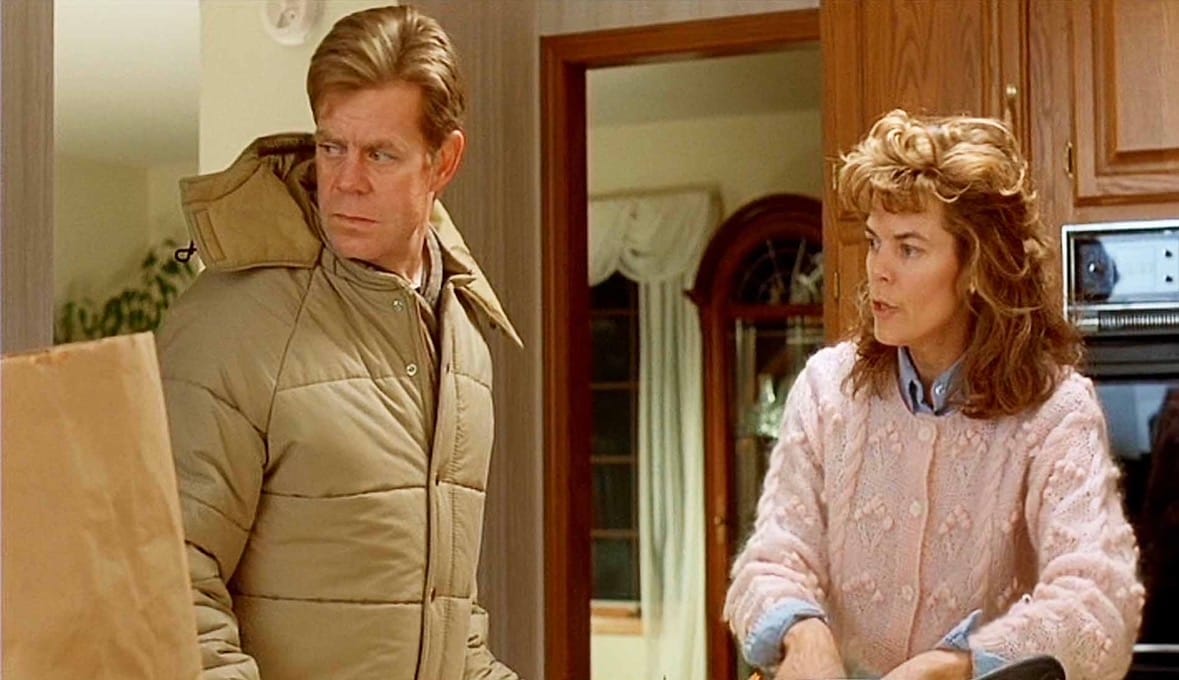
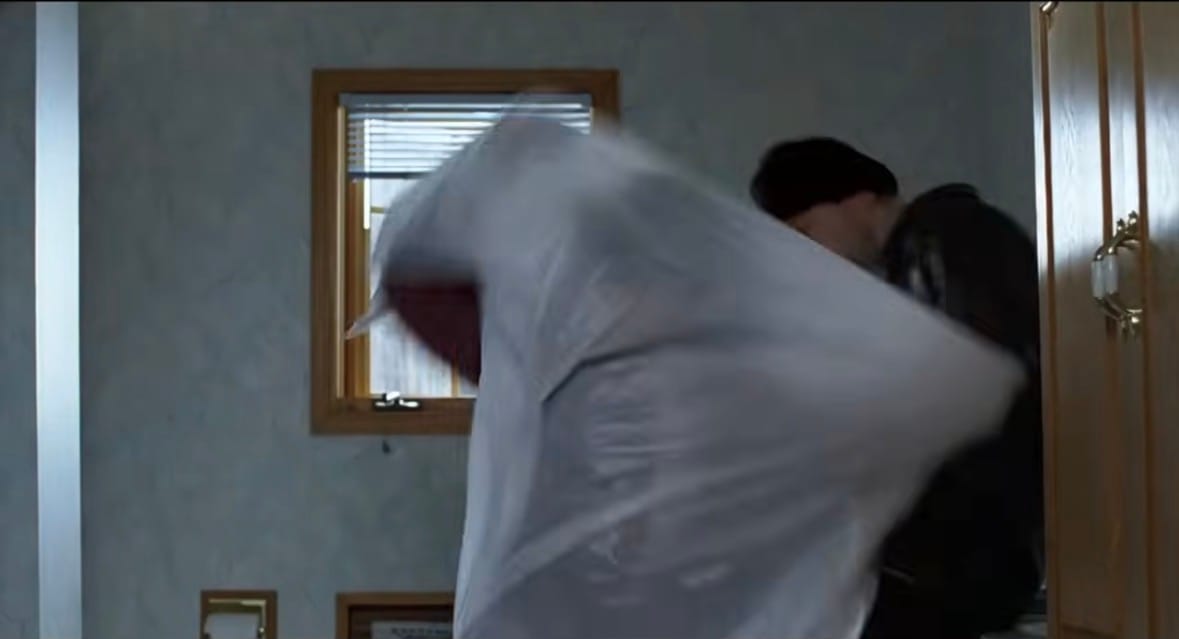
She's taken from her home by Buscemi and Stormare. She tries to hide in a shower, runs screaming from it, gets wrapped up in a shower curtain and falls down a flight of stairs, knocking herself out.
She's brought to a remote cabin where, despite being unable to see or move her hands, she runs through the snow for a minute, trying to escape.
She sits silently in the cabin while Stormare watches a soap opera through heavy static. In a shot that could have come from a Terrence Malick movie, the camera slowly zooms in on breath pouring out from her hooded head.
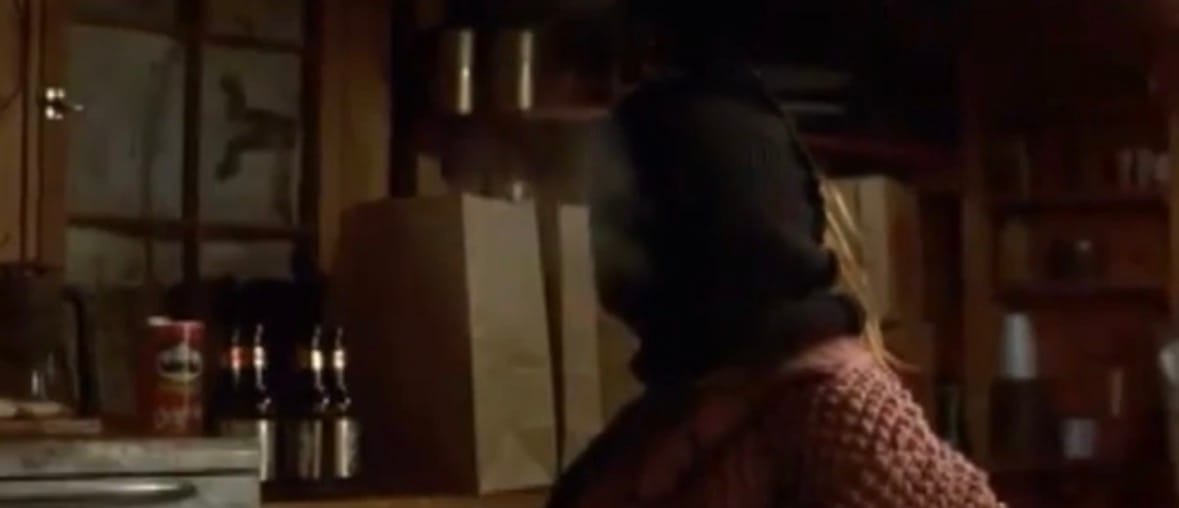
Buscemi returns from his botched meeting to pick up the ransom money to find her dead on the cabin floor. Stormare says “She wouldn’t shut up.” We don’t even get a full look at her. The last time we saw Rudrüd's face, she was in her house, running from intruders, half a movie ago.
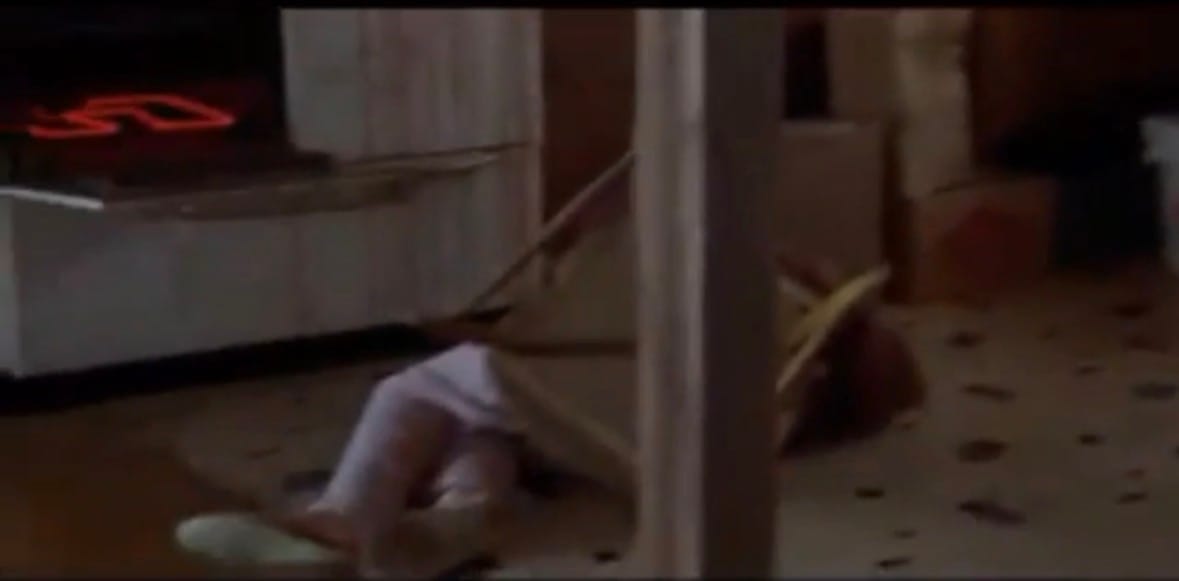
She's the tragic figure in this whole mess. As far as screentime goes, the movie belongs to McDormand, Macy, Buscemi and Stormare (probably in that order). But Rudrüd's the only person who wasn't really supposed to be there and she's the one who gets it worst. You're never afraid for McDormand the way you are in most movies where a cop investigates a kidnapping. Even when McDormand finally discovers Stormare, she's got a gun and he's got firewood; you never feel she's in danger. As far as my sympathies go, the movie belongs to Rudrüd.
It’s interesting how little she has to work with. As a character, Jean isn’t even really a character. She’s Jerry’s way to get some money. She’s a living MacGuffin. Even her name makes her sound like she’s only been written to complement Jerry, like changing “Jerry and Jean Lundegaard” to “Jerry and Elizabeth Lundegaard” would make her less of a component of him. Give that woman her own initials and number of syllables and she’ll have too much agency.
To me, that makes Jean's case all the more tragic. We could say the Coens didn't do enough to make her a 3D person, or we could look at Jean as a character who wasn't allowed to make any decisions for herself, who gets abducted and killed without knowing why. If she's sitting in that cabin thinking "At least Jerry's out there looking for me," she's wrong. She has no idea how linear the path is between watching daytime TV in her home and getting shot in an ice-cold cabin in the wilderness. The way she isn't fleshed out might make me feel more for her.
I do not mean this as a feminist critique of Fargo. I also don't mean it as a defense against an imagined feminist critique of Fargo.
This same thing happened to me with a couple Julianne Moore/Todd Haynes joints. Safe is a dark comedy, I get it, but it's too effectively distressing for me to not feel all the shit Moore and Haynes are putting on screen. May December is a comedy, I laughed plenty when I saw it, but I also empathized as Charles Melton's character get exploited and crushed by the other two leads.
Even with how heightened Safe is from the jump, it's depressing to watch Moore's character lose it and get disregarded by everybody. Julianne Moore not being able to jazzercize to Belinda Carlisle gets under my skin.
That said, the Coen brothers' darkest work is often cruel, whereas movies like Safe and May December are merely bleak. They give you a cut, but they don't throw salt on it afterward.
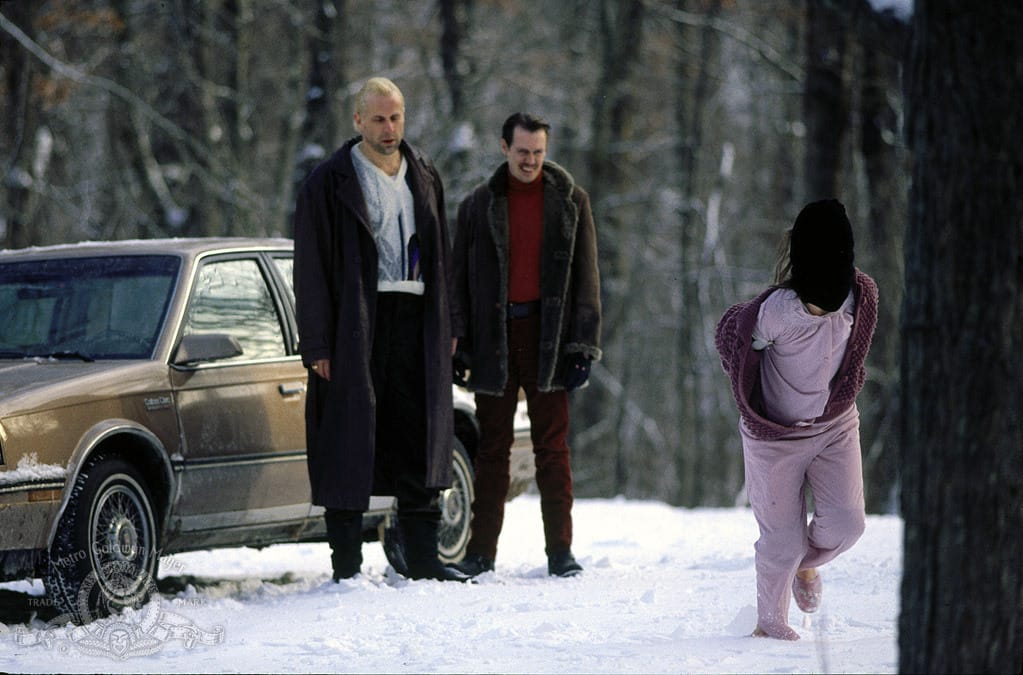
In that screening I mentioned, the biggest laugh Rudrüd got was when she staggered around in the snow like a wounded animal. Again, this scene:
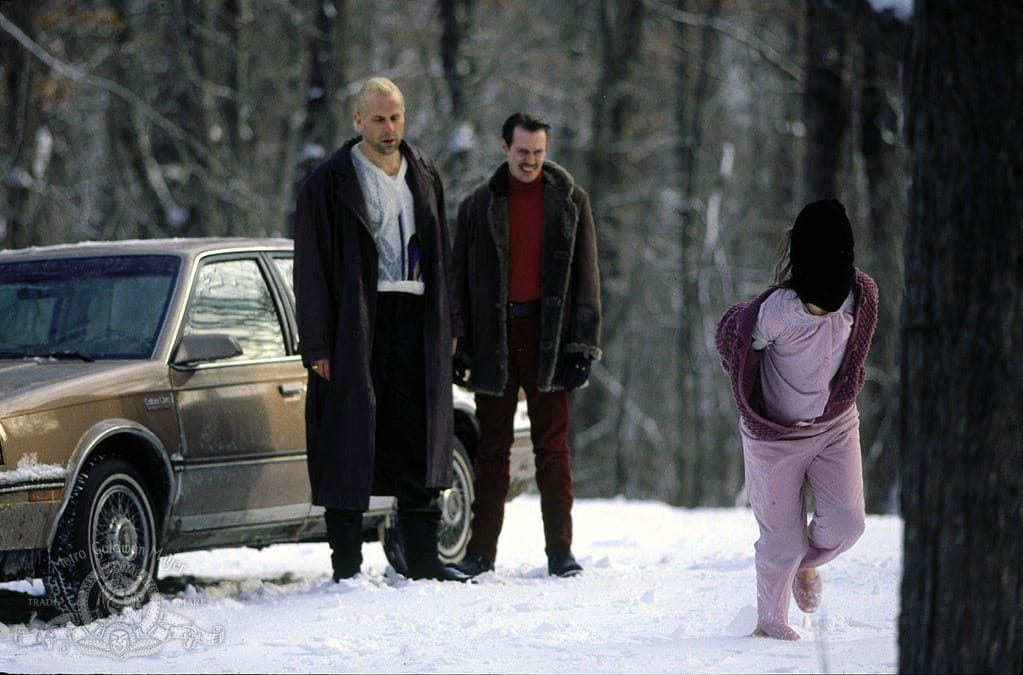
In that moment, we've already passed the point where she has a face. We're about to pass the point where she can move her legs or makes noise. Some of the laugh in this sequence comes from Buscemi, who is himself chuckling at Rudrüd. The joke there is Buscemi's character is an evil psycho who would find it humorous to watch a person struggling for their life. If you want to really dig into the scene, maybe he's laughing because he knows the kidnapping is all a sham, and that he and Stormare are going to release Rudrüd as soon as they get the big bag of money they've been assured is coming. The character isn't laughing at somebody standing up for the last time in their life, he's laughing at how she's flailing around and slipping on her face in the snow. And we've all seen Fargo so many times we know Rudrüd's correct to be frightened, that the kidnapping is the only part of Macy's idiot plan that's going to have gone off correctly, and that she's already been as good as dead for the past half hour.
So there's that tone thing. Is Fargo funny? Yes, and it's most other things, too, and "funny" is pretty low in my personal 'Adjectives You Could Use To Describe Fargo' Power Rankings. I'm curious, genuinely: How funny do you think Fargo is?
That shot of Rudrüd shot dead in the cabin got a sort of mirror a decade later, in No Country For Old Men. The Coens wrote the script for that one, too, but it was based on and stayed pretty faithful to Cormac McCarthy's book. Josh Brolin's Llewelyn Moss gets killed off-screen in a motel, and the last time we see him he's sprawled out on the ground, shot, gone, and the plot's kept moving without waiting to tell us somebody's been taken off the board.
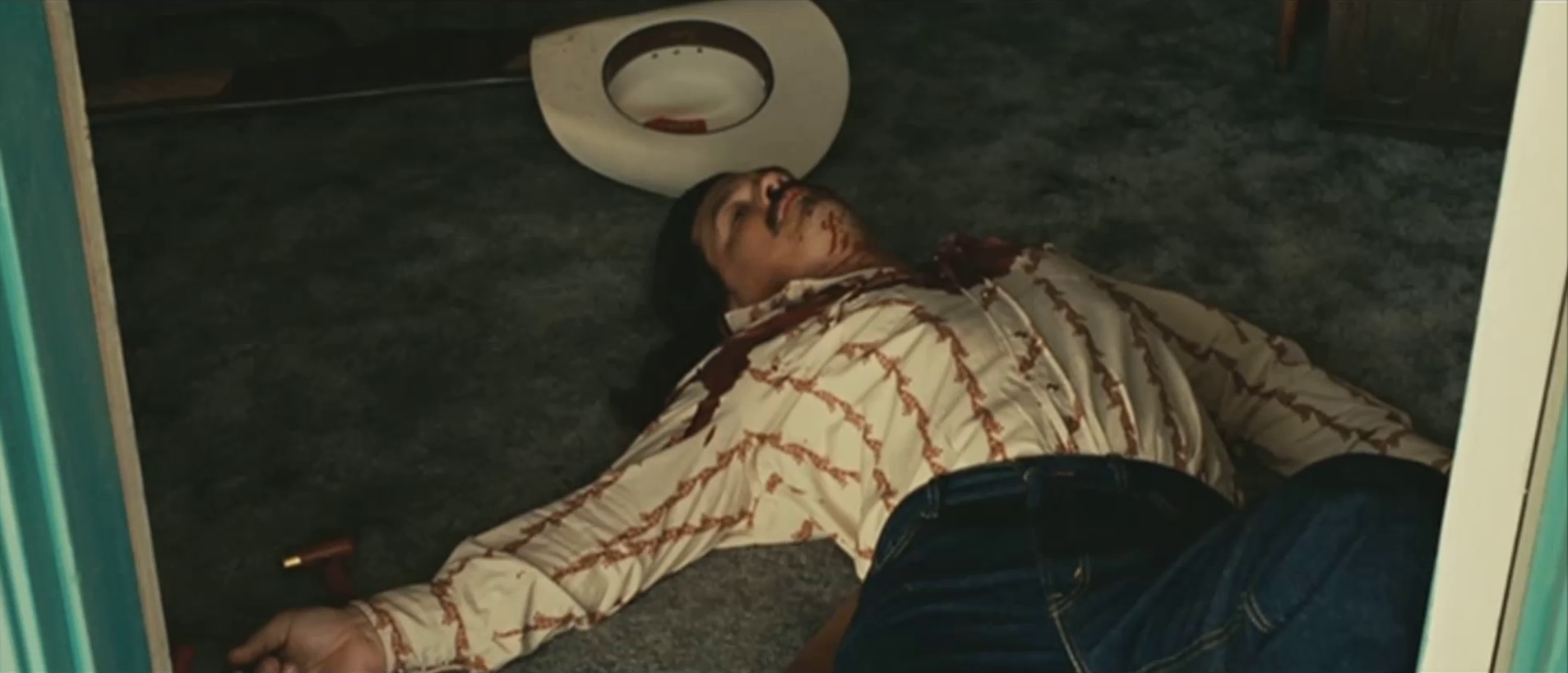
We knew a whole lot more about Brolin's character than we did Rudrüd's though. He had, however inadvertently, put himself in the crosshairs. The character's wife, Carla Jean Moss (Kelly Macdonald) also dies off-screen, though we get some notice of what's going to happen to her, and I guess you could argue her fate is ambiguous. But we know almost nothing about her and then she's menaced and then she's gone.
And then here's Mink (Steve Buscemi, again) in Miller's Crossing, only the second time we've seen him:
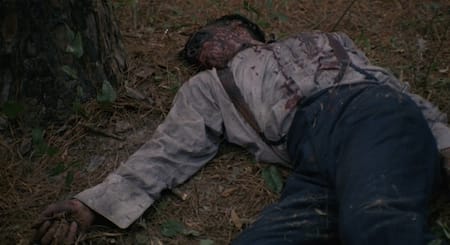
In most narrative work, the off-screen death indicates a lack of import. Especially in genre work, it can feel like if a character means something, they'll get a big dramatic send-off. People will notice. Willem Dafoe'll throw his arms into the air in Platoon, Al Pacino will chase Robert DeNiro around an air field and then they'll grab each other's hands, that kind of thing. The off-screen Coen bros deaths get under my skin in a way few other fictional deaths of any kind can. They're as incidental as the meals and bathroom breaks these characters are taking between scenes. They're so matter-of-fact there's basically no drama in them at all. The world keeps moving. Jean Lundegaard, obscured by a bag on her head courtesy of her kidnappers and a support beam in the foreground courtesy of DP Roger Deakins, dead for no reason, might be too unsettling for a comedy. It's intensity treated as banality and it's something most other filmmakers couldn't pull off, and that alone might be what keeps me from fully embracing Fargo as a funny movie.