I've been re-reading John Christopher's Tripods quadrilogy
When I was in (what I'm pretty sure was) the fifth grade, looking at the big wall of middle reader titles at Kepler's in Menlo Park, CA, I overheard a bookseller describing different recommendations to a father. I don't remember what was said, but some combination of the rec for John Christopher's Tripods books and the cover art of the late-90s mass market paperback edition of the first entry in the series had me sold.
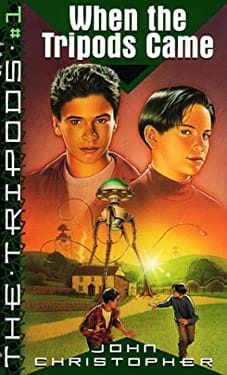
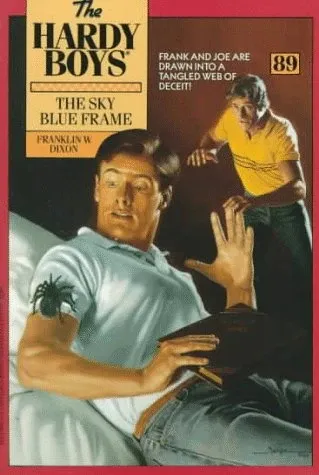
So many middle reader books released from the mid-80s to the late-90s had covers that looked like this: photorealistic paintings of tweens and teens facing disaster. This was every Christopher Pike book, the "mature" R.L. Stine ones (i.e. the Fear Street series), anything in the horror and mystery genres.
This is what Hardy Boys books looked like by 1988:
And this is one where nothing spooky is happening but I need to share it here anyway:
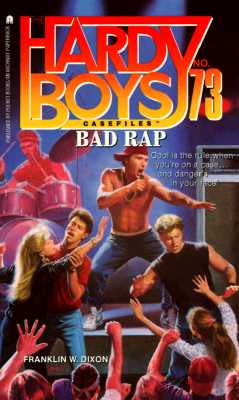
I have a lot of nostalgia for this kind of jacket art, given it's what pretty much every non-Wizard of Oz book I loved from elementary to middle school looked like. I'd be happy to see the style come back and I'm not trying to bash the artists who created this work. But when every book for 10-year-olds looked the same, and when the big hook of the Tripods series was "This seems like War of the Worlds," I don't know why When The Tripods Came felt special. It doesn't distinguish itself at all and, at least to my 37-year-old self, that book cover looks like it's advertising a totally generic sci-fi story, like the endlessly reiterative stuff you find after scrolling too long on Tubi. It could be a post-80s C. Thomas Howell movie. But I took a chance and fell in love. The bookseller's description must have been pretty sweet. Thank you to him.
I did not read the Tripods books in the order they were released. From 1967-1968, John Christopher put out three books: The White Mountains, The City of Gold and Lead, and The Pool of Fire. Twenty years later, after the BBC aired an adaptation of the series, Christopher released When The Tripods Came, a prequel set at least 100 years before The White Mountains begins. Aside from some copyright information I can't imagine paying attention to at 10, the books don't indicate that publication order, and I wouldn't have had The White Mountains on hand to compare release dates with anyway. You'll notice a "#1" in the corner of the When The Tripods Came cover up there. This makes the transition between books 1 and 2 one of the most jarringly grim things I've read.
In When The Tripods Came, the Tripods come. I don't remember a date being specified, but everything seems to take place in the present day. Three alien Tripods, which really are just the skyscraper-sized machines from The War of the Worlds, land on Earth and are quickly destroyed. There's some confusion over what they were, but British society, at least, is mostly amused by these dumb robots that only managed to wreck a barn or two before getting blown apart by jets. Things mostly return to normal but everybody gets hooked on The Trippy Show, a bizarre TV program about a fictionalized version of the Tripods. As the Trippy Show craze amps up, we find out that it's loaded with pro-Tripod subliminal messaging that engenders loyalty to the aliens. In the show and then in real life, Tripods return peacefully and people start wearing rubber "caps" inspired by the show's human characters. The caps are quickly revealed to be a more intensive mind control device than the TV show was. You can remove a brainwashed person's rubber cap and they'll be discombobulated but generally okay. By the end of the novel, rubber caps have been replaced by metal rings (still called caps) fit tightly and permanently to a person's skull. If you remove these, the wearer loses their mind.
I can concede the initial brainwashing method– campy TV serial based on actual alien invaders– is corny, but the introduction of the caps is handled well. The tension in most Invasion of the Body Snatchers-type stories is rooted in the aliens' invisibility and the human characters' inability to know for sure if their loved ones have been replaced. Identifying the converted with hats removes that fear, but Christopher makes the Tripod takeover so overwhelming that it's still creepy when you can tell who's been turned. Nobody takes the caps seriously until their use is too widespread to do anything about them. There was a time the solution was as simple as turning off your TV, but that came and went and things kept stacking until humanity was enslaved.
We see all of this progress from the perspective of an English kid named Laurie. As things get worse and the capped people take over the British army and then government, Laurie, his father and his half-sister Angela lose contact with and then head out to find Laurie's stepmother, who has been visiting her ailing parents in Switzerland (Laurie calls them "the Swigramp" and "the Swigram," which is beautifully weird). The family reunites, but they've watched all of Europe fall to the increasingly-militarized capped, so they leave society and head into the mountains (THE WHITE MOUNTAINS, the ones from the book titled The White Mountains). Every adult not hiding in the mountains is capped, either willingly or by force, and the Tripods institute Capping Day, a rite in which all teens are fitted with caps when they turn 14. The Tripods can't do it earlier because the kids' heads are still growing and their brains aren't ready to take in magic Tripod mind control rays or whatever. Laurie and Angela set up a base in an abandoned hotel and they recruit other uncapped resisters. They're working toward a plan to take the world back. The book ends.
The White Mountains begins with a new 13-year-old narrator, in a British village you'd assume was situated somewhere in the Middle Ages, except the POV character's father has a wristwatch. Over the first few chapters, you're given enough context clues to realize that we've jumped forward in time, the Tripods have enjoyed total control over humanity for at least a century and they've ensured people can't rise up by wiping out almost every technological innovation since the Industrial Revolution. The kids from the first book are long dead. If they launched a rebellion, it didn't go anywhere.
At some point between 1999 and 2014, when the newer editions I'm reading now were released, the people at Simon & Schuster changed the reading order to what it would have looked like in 1988. The White Mountains now has a 1 on its spine and When The Tripods Came has a 4, so a kid picking the series up today wouldn't get such a big jolt between the first and second books. But I still remember how big that jolt was to me. Momentum builds, and though things seem hopeless, you're aware even at 10 that sci-fi stories for kids don't stretch for four books and then end in total failure. By not making it clear that the prequel stands alone, or that it's even a prequel, the publisher got me. I don't know if that feeling carried over to my anticipation for the next book, The City of Gold and Lead. I wonder if I assumed that one would pick up with a different cast, in a different time period as well. That'd be a bold choice. Somebody should write a series of kids books like that.
The White Mountains sees the new narrator, Will, and his frenemy cousin, each of whom is privately questioning the capping in the lead-up to their 14th birthdays, hearing about the rebel outpost that the characters from When The Tripods Came established at the end of that book. They leave their old lives behind, traveling on foot from their little town in England to get to Switzerland. The story's a little too cute at times– the boys make a scientist friend along the way and mock him for thinking steam could be used to propel carriages instead of horses, and it gets brought up so many times you expect one of them to say something like "Are you suggesting there could be an automatically-functioning mobile vehicle? Some kind of auto-mobile?"– but I was happy that the writing was mostly strong. It's functional and doesn't try to get any more poetic than it needs to be. I haven't gone back to read many books I enjoyed at 10, but I've revisited enough comics from that point in my life to know that this is not a given. You try to read the Chris Claremont/John Byrne X-Men run now and it's a trip to the Superfluous Adjective Discount Emporium. If the Silver Surfer comics Stan Lee wrote dialogue for were silent, they'd be the greatest things in the world, but Stan's got the character speaking complete paragraphs about loneliness.
There were two elements of The White Mountains and The City of Gold and Lead that I thought were especially strong, and which I'd argue are as smart as anything I've read in a more literary novel.
The first is the handling of the Tripods. In When the Tripods Came and The White Mountains, a few characters idly wonder what they are: Are the Tripods vehicles or are they the beings themselves? Are they robots or organic? By time The White Mountains has started, the Tripods have erased history and people don't even know that they're alien to Earth. Christopher doesn't tip his hand here until halfway through The City of Gold and Lead. Depending on the order in which you read these things, that's either 1.5 or 2.5 books spent not knowing what the threat even is. The POV characters see Tripods a couple times in each book, and there are confrontations, but the Tripods are usually off walking in the distance, unconcerned with whatever people are doing on the ground. Until the back half of City of Gold and Lead, you don't know if there are 12 Tripods or 200 and you don't know where they go or what they do.
The revelation is fine– the Tripods are ships operated by aliens called "the Masters" who live in a large city unreachable to regular people– but the waiting to get there is really well done. These books span at least 100 years of time, and in that stretch, nobody's been able to both figure out what a Tripod is and return to civilization. There's a hopelessness there that gives everything pretty exciting stakes.
The second element I love: On the way to the White Mountains, that book's narrator and his two friends wind up in a small French town where Will, badly hurt, is nursed back to health by a noble family. While his two friends do odd jobs in the town, waiting for Will to heal enough that they can sneak away and continue on to the White Mountains, Will spends time with the family's daughter, Eloise, and develops a crush on her. At first, he thinks he might be able to convince Eloise to take off with them. When he finds out Eloise is a little older than he is and has already been capped, Will wonders if he should stay behind, get capped and live with her.
He doesn't do that, but it's a very stupid, very understandable thought for a 13-year-old to have. The protagonist gives up everything in his life for freedom and then he almost gives that up too because he's a teenager with teenager feelings.
I've been thinking a lot recently about the degree to which stories implicate the reader in their narratives and the ways they accomplish that. Hitchcock movies do this well, famously. He made films like To Catch A Thief and Notorious, where the protagonist has abilities the viewer probably doesn't, but so many of the plots in my favorite Hitchcock movies are about a random person tripping and stumbling backward into hell. Cary Grant gets mistaken for a secret agent and winds up running from a crop duster, Farley Granger humors a weirdo on a train and almost gets crushed by a carousel, Robert Donat happens to be sitting near a spy, Henry Fonda looks like a different dude, etc.
And these characters are written to do what you or I would do, which usually means they try to get anybody else to listen to how a cuckoo little whoopsie spiraled out of control and now the bodies are piling up. When Farley Granger realizes the weirdo really does want him to kill a person, that it wasn't a joke, he freaks the fuck out. It could happen to you!
This is why we all groan when the character in the slasher movie leaves the safety of their car to check on the creepy noise coming out of the unlit cabin. It's something we wouldn't do because we're smart and rational. It couldn't happen to you!
When Will considers succumbing to a life of alien slavery in exchange for maybe starting a relationship with a girl he just met, it's completely irrational, but it still implicates the reader, I think, as the reader is likely to have felt the same intense, confused emotions the character is. If a girl had shown any interest in me when I was in the fifth grade, at the time in my life I was reading The White Mountains, I would have been willing to give her my legs.
John Christopher has Will snap out of it only when he discovers Eloise is going to be sent away to live with the Tripods. Up until he finds out his adolescent fantasy is impossible, Will is thinking of doing both the stupidest thing he could and a thing an age-appropriate person enjoying middle reader science-fiction would absolutely consider. Or maybe I've just revealed too much about how I was as a tween.
Second post to follow. This one's already long.