The Social Network was a Slasher
I'm going to go in a lot of directions here. I'm not saying that like "Buckle up, buttercup, here comes a thought tidal wave," I'm saying it to apologize for intending to write one cohesive essay and winding up with four rougher ones. Great way to open a newsletter, pull them in by foreshadowing your inability to argue one salient thing.
Twelve or thirteen years ago, when we were all writing things on Tumblr and the world felt a little better, I posted a short essay about my conviction that the smartest thing Steven Spielberg and his screenwriters do in Jurassic Park, a movie with no shortage of smart decisions, is to open with a scene of a caged velociraptor killing a park worker as the compound is still being built. Because no shit the dinosaurs are going to kill people.
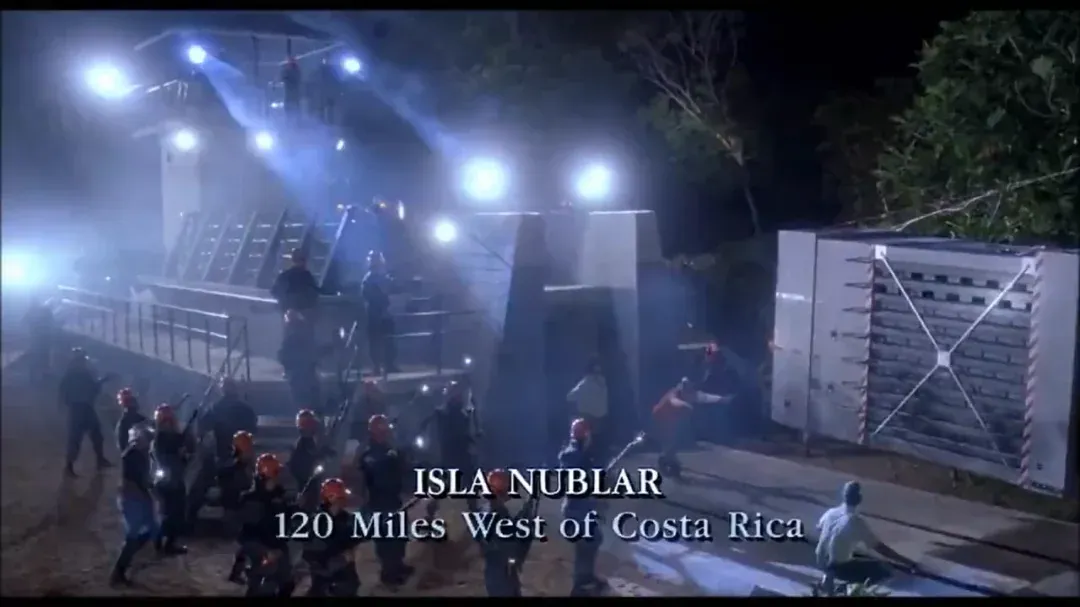
If you see Jurassic Park, you know things are not going to work out for any of the humans. There is no way to sit down in a theater or in front of a TV and feel a sense of genuine shock when the T-Rex winds up on the other side of its enclosure walls. It is why you are watching the film. The shot of water shaking to dinosaur footsteps was and is everywhere.
So if you're making Jurassic Park, it's a good idea to immediately acknowledge that the inevitable is going to happen. Many movies pretend the audience doesn't know what happens in movies. This is true of most narrative art, especially genre work. You watch a movie about a reluctant bank robber taking on a risky heist and it takes 30 minutes for the thief to finally admit he has to accept the job, or you watch a romantic comedy but the script keeps playing coy with the viewer over whether these two mismatched people could find that they have anything in common. We've watched the trailer or we've seen the poster or we've read the logline or we're aware we've bought a ticket for a thriller and the movie's still nudging us with its elbow, whispering "But what if this guy's just going to say 'no' and the big bank robbery isn't going to happen? Huh?" It's almost condescending to waste an hour having a young Clark Kent wrestle with the best way to use his powers when all of your movie's marketing focuses on that character flying around in a Superman costume, saving people. If your film is called Man of Steel, you should not have to pussyfoot around whether the main character is going to become the Man of Steel. I don't feel any awe when it turns out the cars in Transformers are capable of transforming, so let's not treat it like a big surprise when they do that in act 2.
I wrote some now long-deleted paragraphs about the opening of Jurassic Park to Tumblr, and somebody reposted it with their own thoughts, saying that movie began the way so many slashers do. I wish I had the name of the person who added that. I can't tell you how many times I've been reading or watching something since and thought, "Oh, this is structured like a slasher."
Because that's Halloween, that's Friday the 13th and Texas Chain Saw Massacre and Scream. You get something grisly and then the story cuts to a different time or place and normal life ensues, but the movie knows that we know people get butchered in these woods. This is true of most good horror movies, even outside the slasher subgenre– in Get Out, Jordan Peele hides that Allison Williams is evil, he keeps that card up his sleeve, but we're let in on the fact that her family and their guests are malicious by the end of their introductory scenes. The American characters in The Thing think that's a normal dog, but John Carpenter doesn't pretend the Norwegian scientist was just shooting at it for fun. That dog tentacles the fuck out the second it's out of sight.
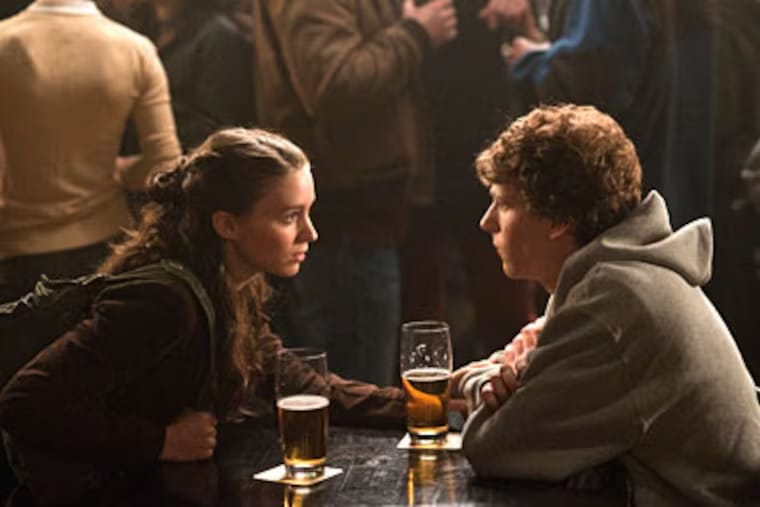
The Social Network is structured like a slasher. It's also, more generally, a horror movie.
I'm not going to defend the movie against charges of misogyny, but I will defend one aspect of one scene people considered to be misogynistic: I don't think The Social Network is saying that Rooney Mara breaking up with Mark Zuckerberg made him evil.
Zuckerberg said in his own defense:
"There's all the stuff they got wrong and a bunch of random details that they got right and the thing that I think is actually most thematically interesting that they got wrong is the whole framing of the movie. Kind of the way it starts, is I'm with this girl who doesn't exist in real life, who dumps me, [note that he means the Mara character isn't based on a real person, but I do like to believe Zuckerberg literally means the movie opens with him going through a break-up with an imaginary friend], and basically they frame it as if the whole reason for making Facebook and building something was because I wanted to get girls or wanted to get into some kind of social institution. And, I mean, the reality, for people who know me, is I've actually been dating the same girl since before I started Facebook, so obviously that's not a part of it, but I think it's such a big thing from, I think, the way that people who make movies think about what we do in Silicon Valley and building stuff. They just can't wrap their head around the idea that somebody might build something because they like building things."
I'm not relying on Zuckerberg to be an intelligent cultural critic of a movie about his life, but I'm quoting him here because many people seemed to take the scene the same way. But the Zuckerberg of The Social Network is an asshole from the jump. In that first scene, he's condescending to the Mara character, he corrects her about the meaningless distinction between calling it a "finals club" and a "final club," he lectures about his own intelligence, he says she needs to be more supportive of him because when he gets into a finals club, he'll be able to introduce her to "people that you wouldn't normally get to meet." At this point, she initiates the breakup, and he responds by accusing her of having slept with the door guy of the bar they're sitting in and insults the college she attends ("You don't need to study because you go to B.U."). He lightly pushes her to reconsider their break-up while acting like going on x number of dates with him has already been life-enriching for her.
I don't think The Social Network is arguing that a woman flipped a switch in Zuckerberg and made him create something to prove himself. I think it's saying he was already a jackass by his late teens and then it shows us one of his early victims. The raptor in Jurassic Park doesn't become a killer because it's around InGen engineers, Leatherface and his family didn't decide to start turning teens into chili because they were bored and Mark Zuckerberg didn't become ruthless because a woman thought he had a bad personality. The evil is already out there and we're just getting a look at the danger is promises.
The Social Network's two biggest strengths are its soundtrack and its editing. The Trent Reznor and Atticus Ross score is tense and creepy, and the two-hour-long montage feeling keeps everything moving. Aaron Sorkin is a dialogue guy, but there are only a few extended conversations in the movie. Nothing really drags. The big depositions are diced up and spread across the film's two hours. What could have been a standard legal thriller became a horror movie.
Last week or however long ago this happened in relation to when this post goes up, Sony released the first trailer for The Social Reckoning, and it doesn't look like we're getting another horror movie. Sorkin's now directing, too, the score is by boring prestige-y composer Alexandre Desplat and the film seems more physically confined than The Social Network did.
The Social Reckoning has two huge assets that'll ensure I eventually watch it: Jeremy Strong does an incredible job acting like Mark Zuckerberg in that trailer, and Mikey Madison is here in her first job since Anora. Either of these points would grab me. When I say Strong is incredible, I mean it literally– I cannot believe how well he's mimicking Zuckerberg's voice and mannerisms in this footage. It's the posture, the little smirk, the blank eyes. Strong was great as Roy Cohn in The Assistant, and I'd assumed this would be a similar performance, with him portraying an insecure loser who now overcompensates with a big ego and the total self-determination that he can destroy anybody who tells him 'no.' This is not that. He looks like an entirely different kind of unpleasant. There isn't much of Madison's character in the trailer, but her work in Anora was, to me, as good as it gets. I'll see her in anything now.
Most of the footage in that trailer comes from a few locations. It looks a lot closer to Steve Jobs, which Sorkin wrote to take place across three key moments in Jobs' life, each right before a product unveiling. He likes to do that. Danny Boyle directed Steve Jobs, but if you look at the work Sorkin's directed, it's clear he's still a theatre guy. That doesn't mean The Social Reckoning is going to be a bad movie, but it's almost certainly going for a different feeling than the one The Social Network nailed.
That's partly because, last-minute jump scares aside, the killers in slasher movies usually lose. Freddy pulls a victim through a window and Jason rises out of the lake, but they're also defeated at least to the extent that the sequel will have to open with some justification for their return. Pamela Voorhees is dead and it's a surprise that Jason might have returned. The Social Network ends with Zuckerberg slightly humbled but triumphant. He's the billionaire in charge of Facebook and potential settlements with an Andrew Garfield a couple Armies Hammer won't change that status. Like so many horny teen victims before him, Eduardo Saverin will not live to see the sequel.
The Social Reckoning has to be, and I mean this on a purely thematic level, a dystopia. We already saw the story of how snotty little Mark Zuckerberg became bulletproof, now we have to watch him rule the world. I'm not yet convinced that's an interesting movie. I think you need all of The Social Network's horror elements for the story to transcend, and The Social Reckoning loses access to so many of those when the bad guy's permanently won.
We already know Sorkin filmed a recreation of the January 6, 2021 insurrection in Canada. The Facebook Files, which Madison's whistleblower Frances Haugen leaked to Jeremy Allen White's journalist Jeff Horowitz in real life, were published in October 2021. If the movie ends before Trump's second successful run for office, which would seem likely, you miss a lot. You don't get to include Zuckerberg broing out, taking his 'alien baby with marzipan skin' image and recreating himself as a guy who entered Jiu Jitsu tournaments and talked about bow hunting on The Joe Rogan Experience. You miss him openly fawning over Trump as the Zuck Squad realizes which way the tides are turning. Filming on The Social Reckoning ended in late 2025, so you definitely miss this strategy working out in Zuckerberg's favor so well that Trump appoints Jiu Jitsu Action Mark to his Council of Advisors on Science and Technology.
Chronologically, the film starts with Zuckerberg on top of the world and either ends with him still there or having discovered a way to clip through the top of the world and get even higher up. Who wants to watch that? Where is the tension there? Does any character in that story get an arc that isn't either a horizontal or nearly horizontal line?
You can, of course, make a very chilling movie about failure. Spoiler for The Parallax View here, but that's an ending I think about constantly. Warren Beatty obsessively tries to unravel a conspiracy and stop an assassination, but he's set up, killed, framed and the credits roll. Arlington Road, released 25 years later, has the same ending, with Jeff Bridges manipulated into unwittingly blowing up FBI headquarters in pursuit of a truth he's much less aware of than he's assumed. No Country For Old Men ends with a small series of acknowledgments about time that are so bleak you almost forget the bad guy had just wandered off to safety a scene or two earlier. Chinatown, Memories of Murder, The Vanishing, When The Wind Blows, The Killing of a Sacred Deer and on and on... There are plenty of films that work for me while ending with a shrugging acknowledgement that evil is going to go ahead staying at large and in charge if it wants to, despite everything the other characters have done. Failure is always an option.
But I didn't have to spend the past ten years living through The Vanishing. And anyway, that horror, like the horror of Faye Dunaway's body depressing her car's horn or of Warren Beatty getting picked off by a sniper, is visceral.
Whenever I watch The Social Reckoning, no matter what happens in months leading up to that moment, I'll be experiencing a low buzz of horror I'll never quite adapt to accommodate. Mark Zuckerberg is still going to be a billionaire. He's always going to have a compound on Kauai and the Facebook algorithm is always going to have played a big part in destroying a lot of people's brains and their senses of empathy for themselves and each other. Zuckerberg could fall down an open manhole and die tomorrow and he will still have won on a historical level.
Bong Joon Ho's Memories of Murder or David Fincher's own Zodiac were based on actual unsolved murders, but they were released in 2003 and 2007 and covered crime sprees that had ended by 1989 and 1969. The specific strings of killings in these films had stopped long before the movies came out.
At worst, The Social Reckoning will tell an incomplete story, and at best it'll be like a narrative feature on an incurable disease. You'll feel sad, there'll be nothing you can do and you'll know all the stylized dialogue you just heard will have actually been said in much blunter terms by people who are genuinely going to keep making the world a worse place. Their crime sprees are nowhere near done. The Social Network was a slasher and The Social Reckoning will be a snapshot of a kidney stone you'll spend the rest of your life trying to pass.
That's a narrative genre, right?