Moments Movies Break
There's no thesis or argument here. Just talking about a thing I enjoy.
I haven't seen The Dead Don't Die (seemed kind of masturbatory) or Father Mother Sister Brother (Mayim Bialik), so I'm working with an incomplete survey, but my least favorite Jim Jarmusch movie's probably The Limits of Control. Jarmy's got some masterpieces and Limits should work for me– it's a sparse Richard Stark/Point Blank-inspired story where a hitman takes on an impossible task and runs through a bunch of vignettes with great actors like Tilda Swinton and Gael García Bernal, plus Christopher Doyle is the DP and there's drone music blaring over everything– but it ends up feeling like a slog. I liked The Counselor, I'm fine with characters flatly exchanging doom philosophies, but something about Limits has never clicked with me.
There's one bit I couldn't love more, though, that almost justifies all the dull parts. None of the characters in this movie have names, so I'll describe it referring to the actors. As the film opens, Isaach de Bankolé's protagonist is in an airport, talking with Alex Descas. Descas gives de Bankolé a little piece of his extremely vague mission and says "Use your imagination and your skills." As the film continues, de Bankolé gets more information on what exactly he's been sent to accomplish. And then the piece I love: In one of the film's final scenes, de Bankolé has tracked his target (this will turn out to be Bill Murray) to an impenetrable compound in a Spanish desert.
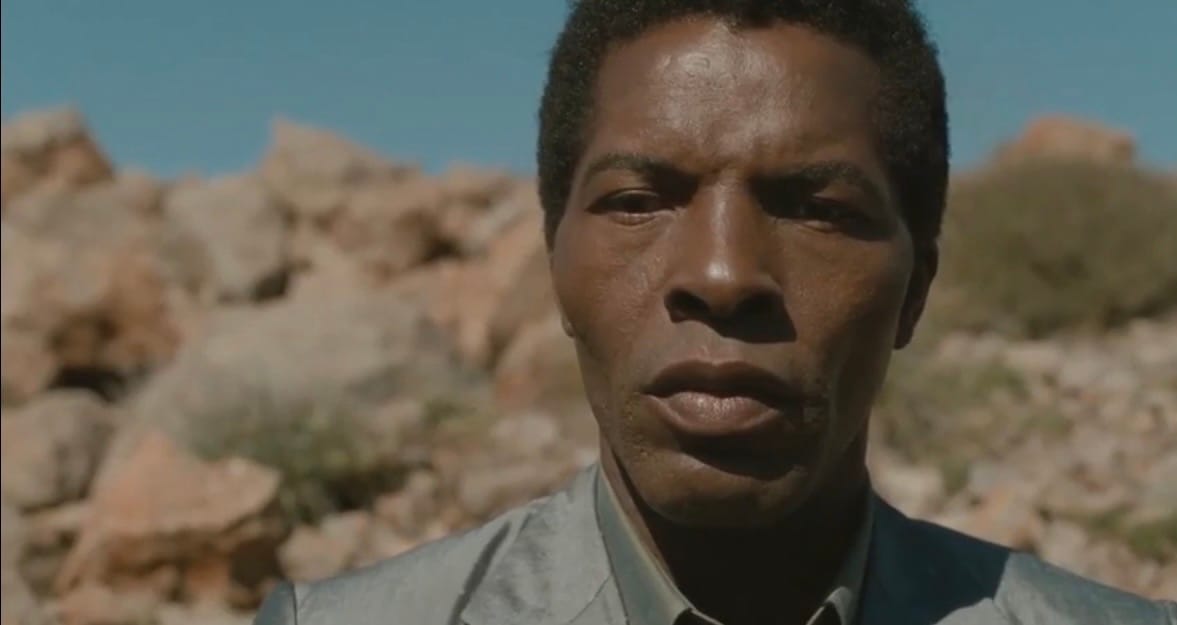
He looks on from a hill.
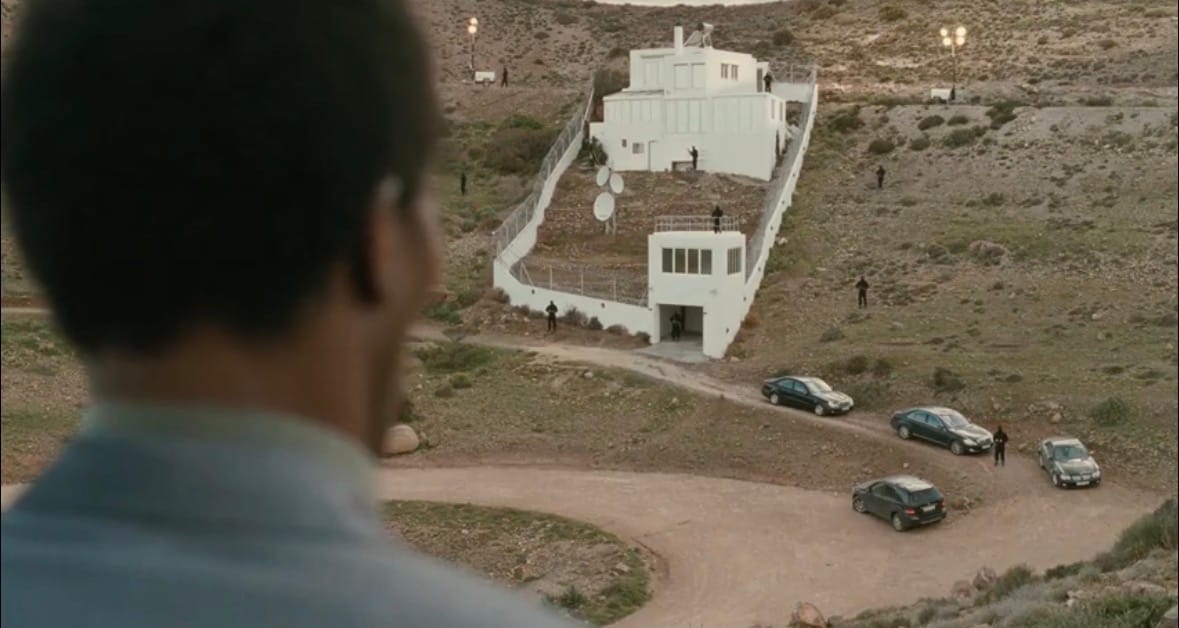
He watches as a helicopter lands outside the compound, cars pull up and people with guns shadow people in suits.
He walks around thinking, burns his map of the compound and returns to his hotel for the rest of the day.
He returns to the compound in the middle of the night.
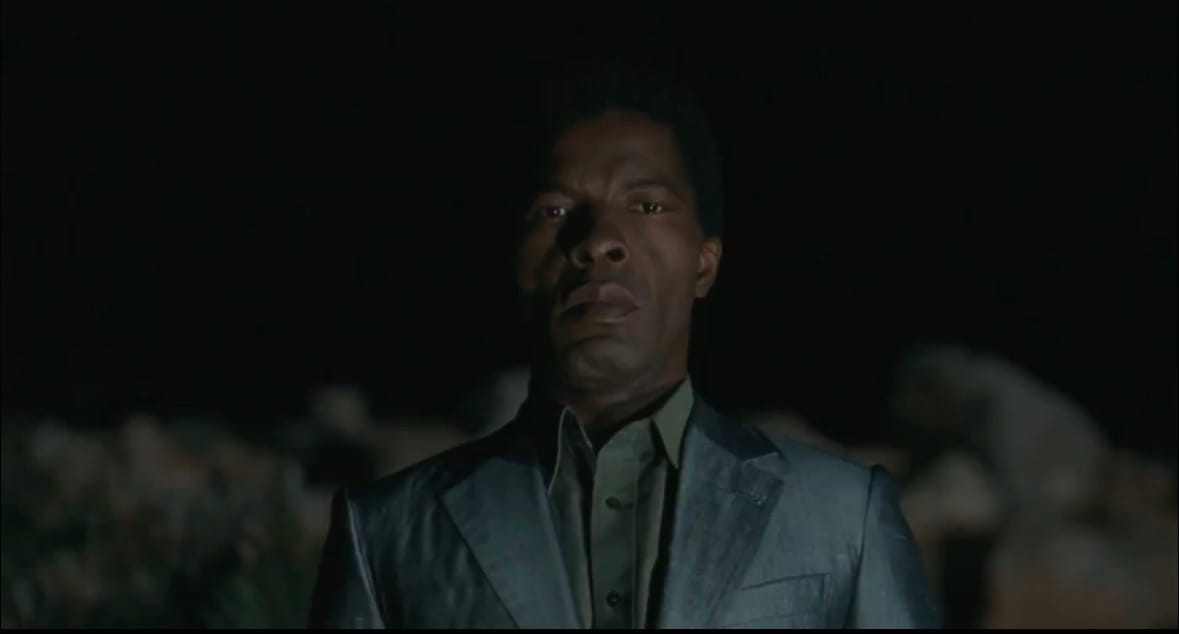
He looks on from the hill again.
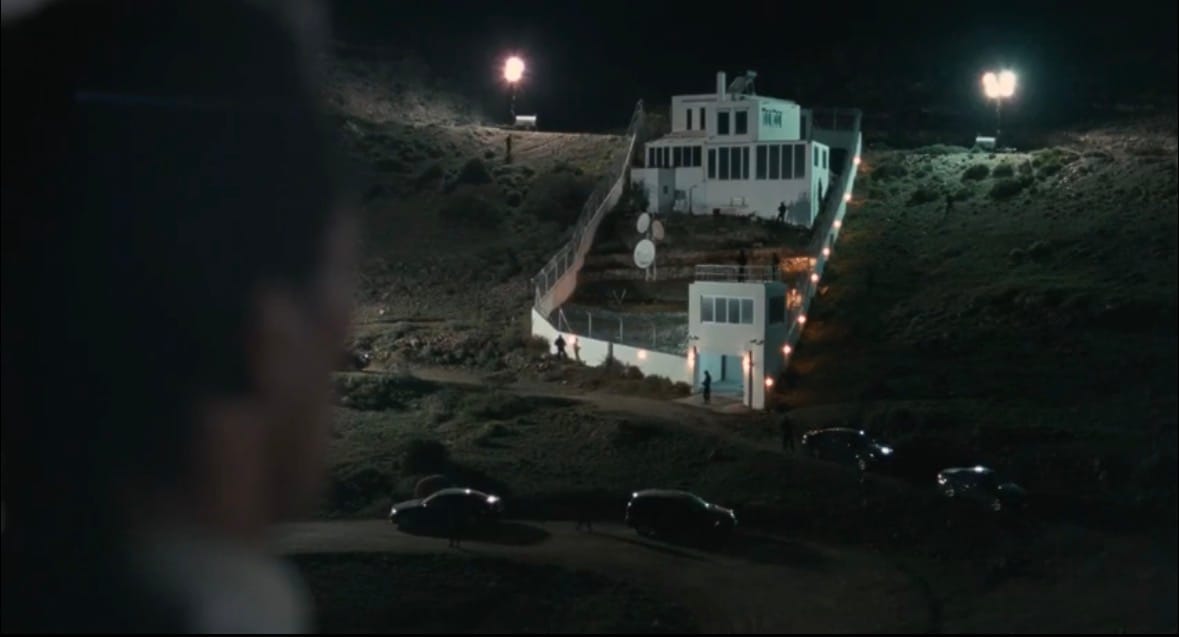
We get the same view of de Bankolé surveying the compound.
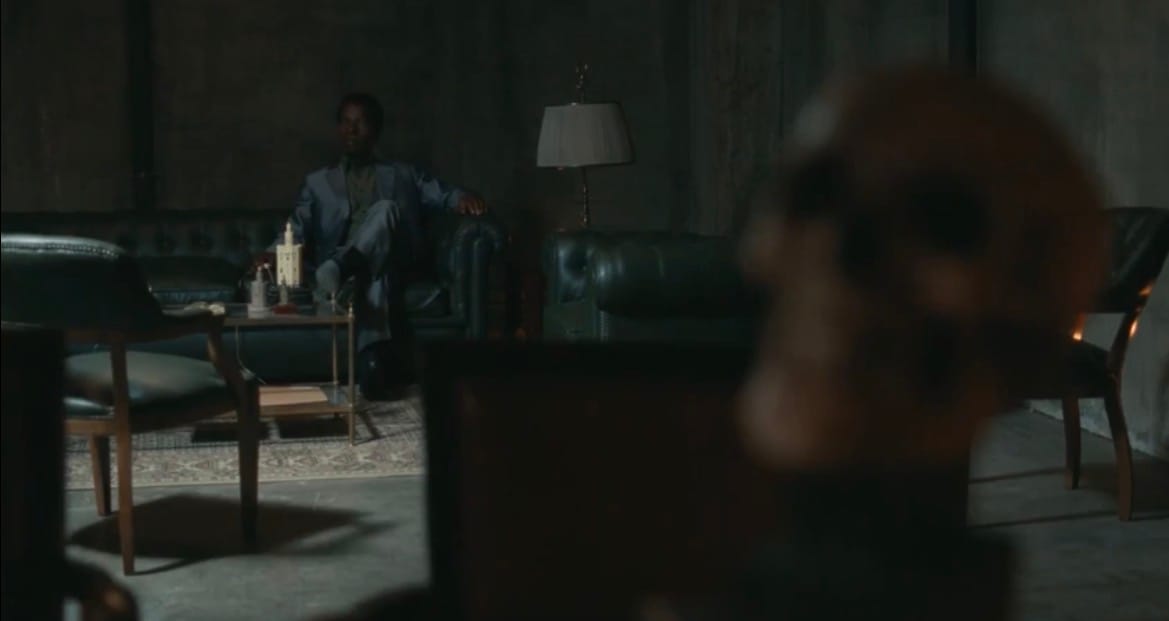
And then, in the very next shot, he's inside the target's office, sitting on a couch. Murray goes through a few security checkpoints, walks into his office and only realizes there's somebody else around when de Bankolé turns on a table lamp.
"How did you get in here?" Murray asks.
"I used my imagination," de Bankolé says. And then de Bankolé kills Murray, appears back outside the compound and returns to his hotel.
When people always talk about Jim Jarmusch being cool, they mean it in the late-70s New York art world sense. They're talking about how he's the only guy to hang out with both No Wave people and the Wu-Tang Clan, how he directed three movies starring walking whoopee cushion Roberto Benigni and managed to make Benigni seem as interesting as John Lurie, Tom Waits, Screamin' Jay Hawkins and all these other epic figures that pop up in his movies. Not that I know a single thing about being cool, but this seems different from the John Woo or Michael Mann badass action movie cool Jarmusch only really indulges in with Ghost Dog and some of Dead Man. As bland as most of Limits is, de Bankolé inexplicably phasing in and out of a heavily-guarded fortress using "his imagination" is, to me, the peak of badass action movie cool and is as "oh shit" a moment as anything Lee Marvin does in Point Blank.
In some ways, this is a cousin to the Robert Altman character motivation theory I wrote about with You Can See Everything. I said that there was the viewer questioning why a character would do something and then there was questioning why a writer/director would make a character do something. This is the viewer wondering how a character did something, rather than why. The character's motivation couldn’t be clearer– he has to kill a person– but the writer/director cheated to let them accomplish their goal. And I don’t mean “cheated” to imply cheapness, just the circumventing of established rules.
Limits is a somewhat weird movie, but this is probably the only moment you could call "magical realism,” and that’s why it works for me. If the “I used my imagination” bit happened in a Gabriel García Márquez novel or a movie like Synecdoche, New York— art I love, to be clear— it wouldn’t have as much of a kick. It wouldn’t be breaking the rules because those stories don't have rules, they're operating on dream logic. The one inexplicable action makes the writer/director’s motivation so much fun to think about, even if Altman’s philosophy about motivation being unknowable still applies. Why break the movie there? And, to clarify this the way I did "cheat:" I don’t mean “break” to imply error. The movie breaks like a glowstick or a Christmas cracker. It would’ve been inert had it not been broken.
I’m trying to think of other stories that break in this way. I don’t think these next examples are inert without their single lapses into magical realism, but they came to mind.
[I apologize for writing yet another 100 words about a Coen brothers movie. I will do better going forward.]
The Man Who Knew Too Much is brutal, beautiful, straightforward noir. It’s the Coen brothers film people seem to talk about least, maybe because it hit just as their only real low point was about to begin. That movie, which could have otherwise been made in the 40s and played at the same time as The Big Clock or The Postman Always Rings Twice, takes a trip sideways for about three minutes, when a flying saucer shows up in a dream protagonist Ed (Billy Bob Thornton) has in prison. Ed wakes up in his cell, finds the jail around him empty, walks into the yard and sees a UFO. The UFO shines a light on Ed, Ed nods, he walks back into the prison and the UFO flies away.
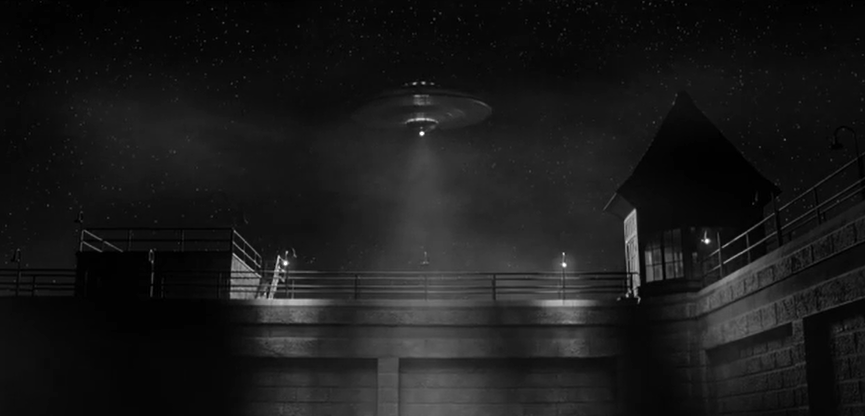
It's a surprising moment, but when you watch the film again, you notice all of these little references to flying saucers and you realize there's been a long build-up to this left turn.
The Fargo TV show would use a UFO in its second season. That one's indicative of why I didn’t like most of that show, actually. Noah Hawley drops it in less for the mystery and art of it and more because it‘s a thing that happened in a Coen brothers movie. In The Man Who Wasn't There, the UFO's foreshadowed subtly enough that you both wouldn't expect it but still have to accept its presence. There, it probably represents Ed's alienation from the world and his nod is a sign he's accepted his death sentence and isn't going to try to escape and blah blah blah. You watch the Fargo show and it’s like a guy going “Get it? GET IT?” Do you get that the first season is pretty similar to the movie Fargo, plot-wise, but if Anton Chigurh from No Country For Old Men was running around in the background? Do you get that the Ewan McGregor brothers are fighting over a rare stamp and one of them is thematically represented by a duck and John Carroll Lynch was worrying about a duck stamp contest throughout Real Fargo? Do you get that Chris Rock says “What’s the rumpus?”
It’s like a late-period Star Wars movie in that way, like when you watch Han Solo put on a vest for the first time and tell Chewbacca “I’m going to need to give you a nickname because Chewbacca's too long.” Yeah, I see the reference, I’m on the inside, too. I know Harrison Ford's Han Solo has a vest and that he calls his buddy "Chewy." That isn’t why I engage with art, though. I don’t want to be on the inside. I want to be so far outside the creative process I can't see the script's framework. I don’t want to look at a character like a math problem, where who they are is just "[Coen bros. character] plus/minus [trait], if they were in [entanglement] with [character from a different Coen bros. film]." There’s no wonder in the TV show's UFO moment because the creator's motivation is crystal clear— "This is something the other guys already did." It’s a remix of a cover. The Fargo show wasn't bad, it just had a way of making the Coen brothers' flourishes less interesting.
A similar UFO thing happens in Jia Zhangke's Ash Is Purest White. I fucking love Ash Is Purest White. You can come over and watch it this weekend if you want. It’s a movie about Qiao (Zhao Tao), a gangster’s moll who takes a fall for her guy, spends five years in prison and then gets out and tries to pick up the pieces. For what it's worth, Ash isn't an action movie, but it has an all-time great fight scene. The fight's got nothing to do with anything, I'm just trying to sell you on watching Ash. There's a little side-plot in the film where Qiao talks to a person sitting next to her on the train, and he says he's starting a UFO tourism group. When Qiao expresses interest, the man admits he's lying, that he was just looking for some way to talk to her. Qiao gets off the train, sees a UFO fly past and continues on her way.
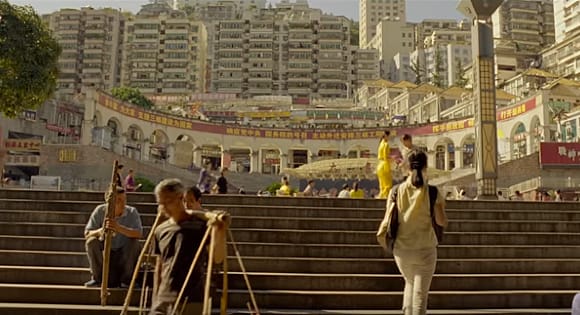
There, the UFO echoes a spaceship's appearance in Still Life, a different Jia Zhangke film starring Zhoa Tao. We actually have a straightforward explanation for the UFO, from a great interview Zhangke did with a writer named Camille Bourgeus in 2019:
Throughout the entire time span of the film, Qiao has to deal with generational issues over and over again: between her and her father, her and her boyfriend Bin… The constant problems, expectations and misunderstandings in her life are like a cycle she cannot breach. But then, upon arrival in Xinjiang in the far northwest of China, she encounters these mysterious lights in the sky and for the first time in her life she acknowledges that she is on her own. She feels the energy to engage in things that were before not even within reach of her perception. She is overcome by a feeling that transcends reality, a sense of fundamental loneliness that she comes to perceive as the only reality, the essence, of her life.
He also talks about realism "as an expanding concept, and not as a closed box or a vacuum." But the UFO moment works for me because it's the only time in the film Zhangke allows for surrealism. He'd already made weirder things, just as the Coen brothers had filmed the flaming hotel in Barton Fink and time freezing in The Hudsucker Proxy, but there was no reason to expect a UFO in this movie. With Ash Is Purest White and with The Man Who Wasn't There, these things don’t change the plot in any way. They’re little daydreams mixed into everything else, and we get to wonder about what they mean thematically.
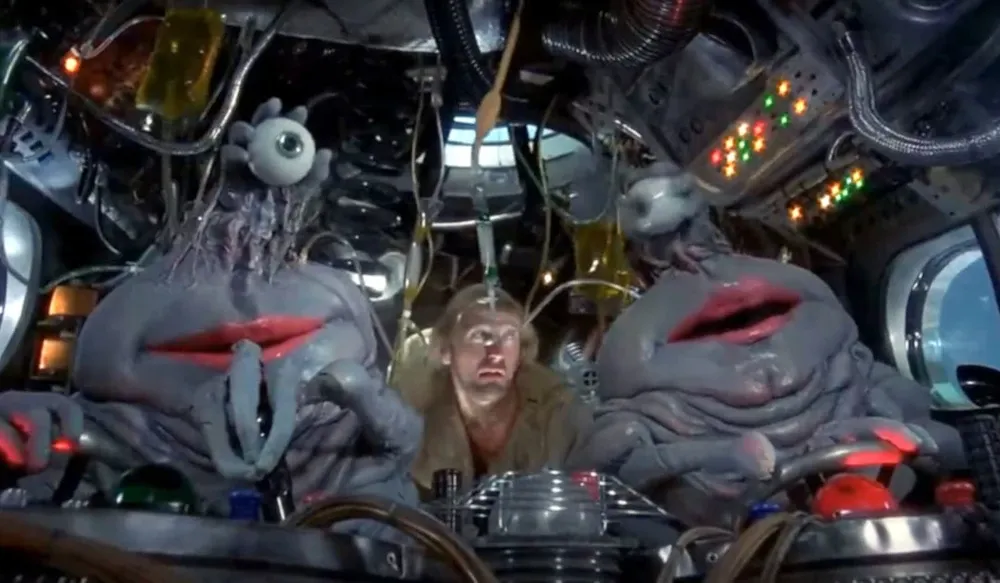
Before we leave surprise spaceships, I should acknowledge these guys from The Life of Brian:
The Master's got a great lapse into magical realism. Freddie Quell (Joaquin Phoenix) has been estranged from Lancaster Dodd (Philip Seymour Hoffman) since riding off into the desert on his one-time mentor's motorcycle. In that time, Lancaster's moved his Scientology stand-in over to England, mirroring L. Ron Hubbard fleeing America to stay ahead of the IRS. We don't ever learn if Lancaster's emigrated for the same reasons, but I think we can assume he's at least operating in a diminished state.
In a movie theater in Massachusetts, an usher comes up to a sleeping Freddie with a phone, wakes him up and says he's got a call. Lancaster's somehow identified where Freddie is and he wants Freddie to come visit in England. "Will you bring some Kool's?" he asks. And then Freddie actually wakes up. Despite this apparently being a dream, Freddie travels to England and is given a meeting with Lancaster. He brings Lancaster a box of Kool's, which Lancaster thanks him for. Freddie references the dream, saying Lancaster had promised some sort of breakthrough, but Lancaster doesn't really acknowledge it and it's unclear if he experienced the same psychic connection Freddie did. He does tell Freddie he can now remember their past lives, that they were comrades in Paris, and that in their next lives they'll be sworn enemies. It's their last conversation and a great scene.
I'd never put this together before because these sequences are separated by two hours of movie, but the first time they meet, Lancaster gives gives Freddie a processing/auditing session, and they're shot like this:
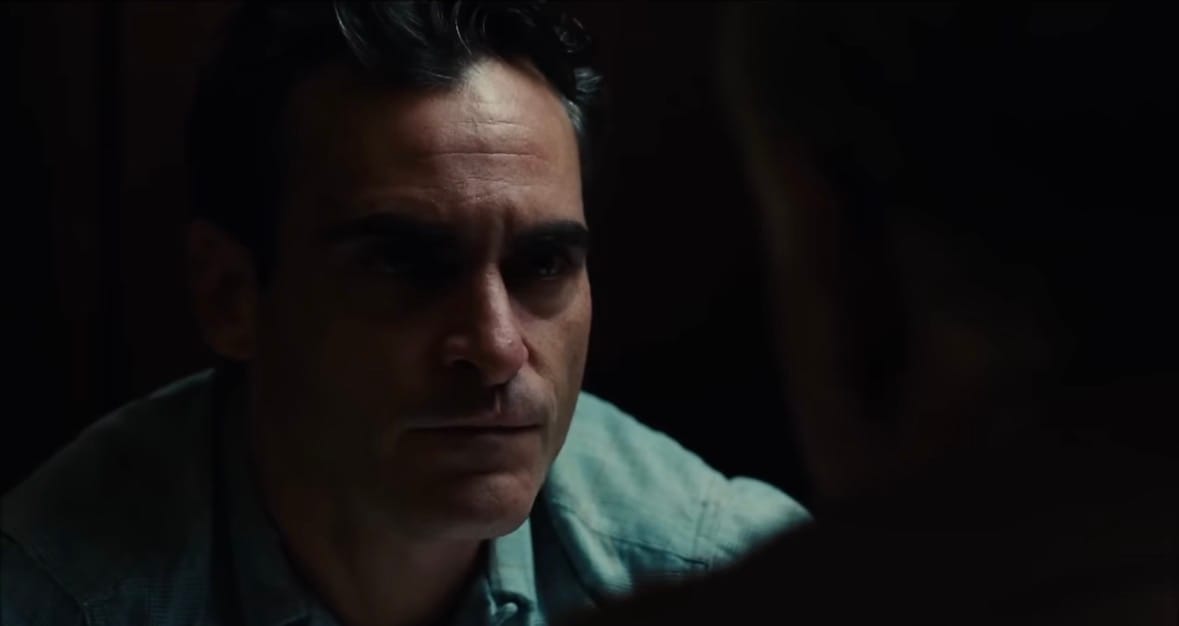
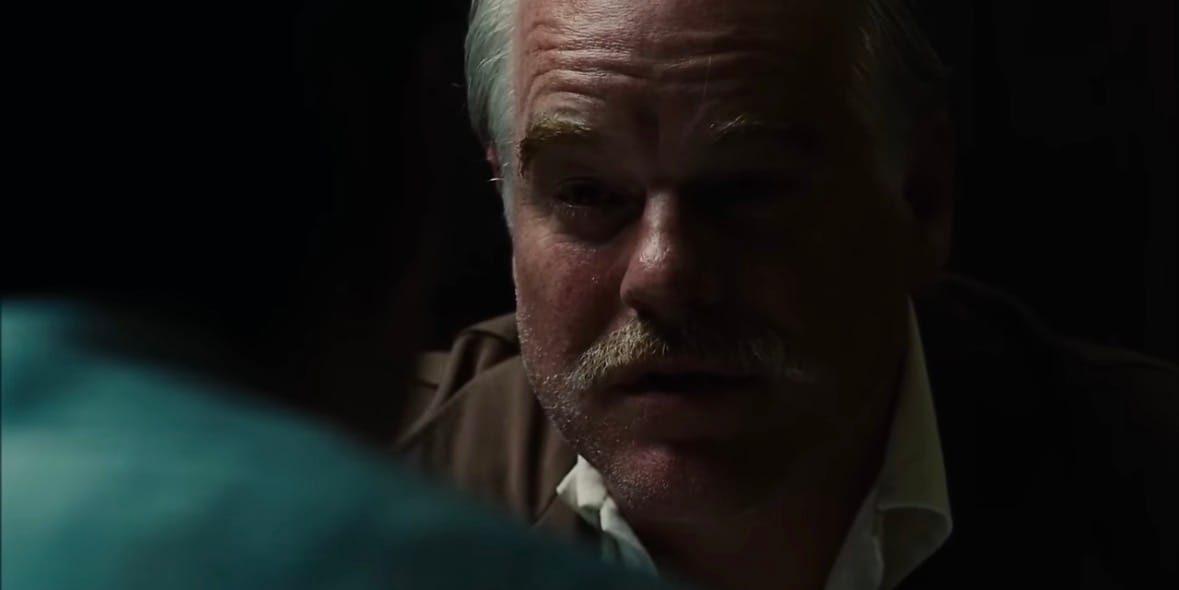
It may be hard to see in those screenshots, but each man is always visible in the other's frame. And then the last time they meet, they're shot like this:
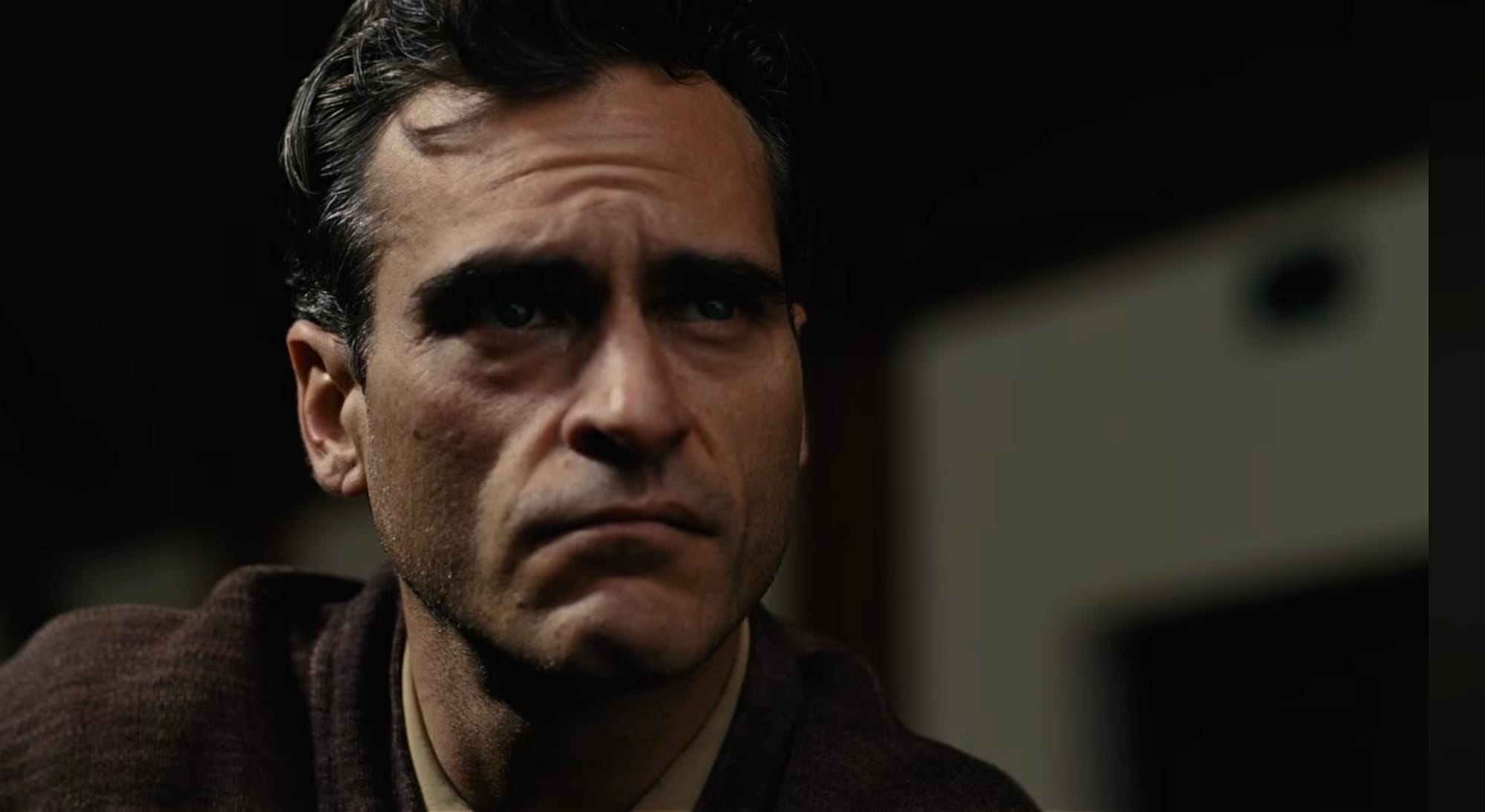
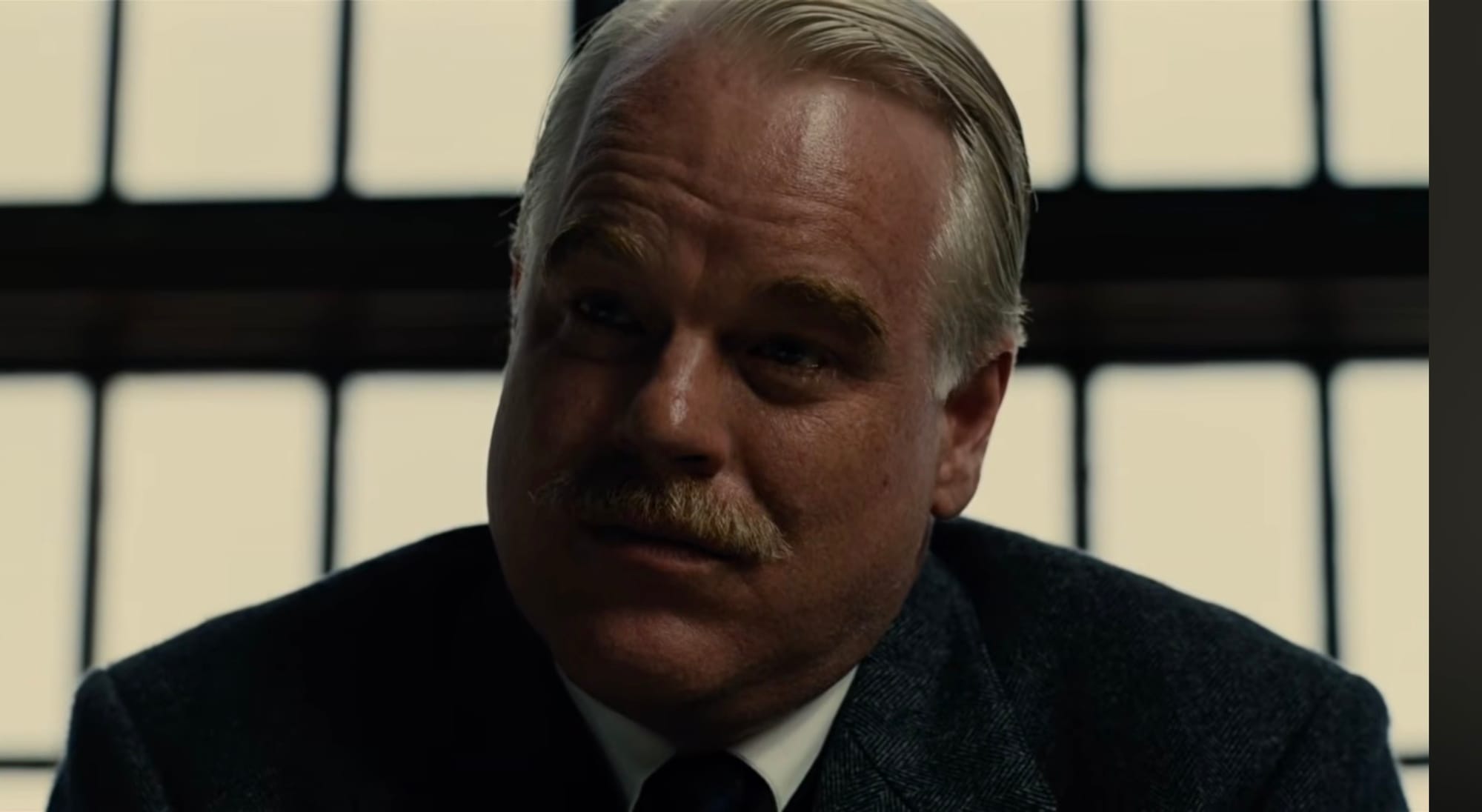
No more overlap. Somebody please alert the Vimeo essayists. If they're all busy, I'll settle for a YouTube essayist. If nobody there bites, we're selling this insight to the DailyMotion essayists. Somebody who would normally spend an hour pointing out the way David Fincher uses coffee in his movies needs to dig into this.
The shots' framing is a fun little side detail, but I bring up repetition across the first and last Freddie/Lancaster face-offs because it reminds me of the way Isaach de Bankolé has two nearly-identical experiences outside that desert compound in The Limits of Control. That's always a great way to inject the inexplicable into your story– you show us what a thing looks like normally and then you show it to us again in a metaphysical context. This is a man trying to get into a base/this is a man who can will himself into a base. This is two men making a connection while conversing after a random meeting/this is two men acknowledging their old connection has now fully severed while conversing after being drawn to each other across the world. It's just a headier version of Highlights Magazine's 'Spot the Difference Between These Two Pictures' game, but it's always effective.
Not to bring up Cormac McCarthy as often as I do the Coen brothers, but I am a white man with a newsletter and I mentioned The Counselor and No Country For Old Men for a reason. And McCarthy explicitly said he disliked magical realism. For me, one of the great parts of Blood Meridian is Judge Holden's omnipresence. When you actually map out the novel's timeline (something people smarter than I am have done), the Judge's actions are impossible. He's multiple places at once and he's the same age across decades. That, to my mind, is magical realism. It's actually the best kind of magical realism, the kind that breaks the world for a moment before everything smooths itself out.
If you can think of other examples of this kind of thing, let me know!