Texas Chainsaw Massacre (2022), Richard Price, Smile, etc.
"It's a crime/horror story about gentrification." Isn't that enticing? Isn't that the first time you've ever heard anything described like that? People are always talking about how surprisingly smart some new genre story is for featuring gentrification as a theme, like The People Under the Stairs didn't come out in 1991 and Candyman didn't come out in 1992. And nearly every crime plot ties into the strain of capitalism at some point, even if it's just about one person stealing money they need to get by. Uwe Boll's racist Armie Hammer vigilante movie is about gentrification. This is old hat. Even handling it well is old hat.
Regardless, I'd like to describe what's probably my favorite piece of art about gentrification. In Richard Price's 2008 novel Lush Life, the plot kicks up when two white guys are in New York City's heavily gentrified Lower East Side, walking home after the bars have closed. They're mugged by two younger men, one Black and one Latino, from a nearby housing project. The muggers pull a gun. One of the mugged gives up his wallet and the other guy takes a step toward the guy with the gun, waves his hand and says "Not tonight, my man." And that guy gets shot and killed.
I'm not going to describe this any better than Price himself did on Fresh Air 18 years ago. Here's an excerpt on murder from NPR's transcription. It begins with Price describing the person who gets killed and how he fits into an area with a bunch of disparate cultures "walking around sort of oblivious to each other":
PRICE: I mean, he thinks he's in a movie... What happens is that you got a lot of people down there [in the Lower East Side] now. Like I say, you know, they kind of live in their own world, and they're kind of blind to these other worlds that they're around. And this goes both ways, because the kids in the projects really don't understand this wave of MFAs that are living down there. And, you know, you go bar-hopping. You know, you get all beered up. It's 3 in the morning. Somebody puts a gun in your face– you've never had a gun in your face before in Indiana or wherever you come from– and you think you're John Wayne, and you say the worst possible thing you can say. But all of a sudden, you know, the movie's over.
GROSS: Why is that, why is "Not tonight, my man" the worst thing you could say to a kid from the projects who has a gun on you?
PRICE: Well, what happens is somebody puts a gun in your face like that and if they have an audience behind them, it's like you're challenging their manhood. You know, it's 'Would you rather go to jail for the rest of your life or are you going to look like a punk in front of your friends?' And 99% of the time when a crime like that happens, it's unintentional or it wasn't 'I'm going to go out and shoot somebody.' It's like 'I'm going to go out, scare somebody with this gun and get enough money to buy some Chinese take-out.'
I also liked what Price said about the setting of Lush Life to Antonino Ambrosio in a feature for The Rumpus. These are 18-year-old interviews I read on publication, but I still think about them. Here's some of that, with Price repeating a variation of his Chinese food bit:
“Like the Jews during Jacob Riis’ time,” Price tells me, “everything and everyone is living cheek and jowl down there. There is no antagonism down here, there’s no project homeys versus Midwestern laptopers…there’s none of that tension because they don’t notice each other as everyone’s in their own world even though they occupy the same physical space they just pass each other by like it’s a race. It’s like these planets who are miraculously orbiting the same circuit and never crash except,” he says, “once in a while some kids in the project will try to go into the golden interior and jack somebody for money and get up on a package or go out and get Chinese food or whatever.”
[...]
Through his time researching, one thing is evident to Price: real estate rules the day in urban areas like New York. “It’s a combination of Giuliani-time and the real estate market discovering the potential of Manhattan’s Lower East Side,” Price says. According to Price, no politician would be “suicidal enough to knock down a housing project.” So, there are groups of people stuck and shunted to the margins sitting on potentially some of the most lucrative real estate in the city while experiencing some of what the worst that City has to offer in terms of opportunities and services. Price tells me cops refer to this strange contradiction as “a billion dollar view on top of ten cent people.”
"Not tonight, my man" is such a rich string of four words. Price squeezes all these shades of arrogance in there– overfamiliarity, confidence in this being a thing that happens to other people, condescension– and you don't want to see anybody get killed but bad things feel inevitable when an exploited party comes into contact with an exploiting one and the exploiter thinks he's got God Mode enabled.
Last week, I revisited David Blue Garcia's Texas Chainsaw Massacre legacy sequel. This is the one from 2022, produced and co-written by Fede Alvarez, the one that's up on Netflix. People hate this movie. I know everybody's out here pretending The Texas Chainsaw Massacre 2 is as good as the original and some will even defend the Platinum Dunes remake (first R-rated movie I saw in theaters without my parents!), but this Texas Chainsaw Massacre is, for me, second only to the original The Texas Chain Saw Massacre.
Note the "Chain (_) Saw" spelling discrepancy and the "The"– as Vanilla Ice would say, "that little bitty change"– because that's the only differentiator we've got between these titles. In 1974, Tobe Hooper made The Texas Chain Saw Massacre, and then in 2003, Platinum Dunes made The Texas Chainsaw Massacre and then in 2022, Garcia and his crew made Texas Chainsaw Massacre.
The Texas Chain Saw Massacre
The Texas Chainsaw Massacre
Texas Chainsaw Massacre
There are three movies called some form of "The Texas Chain Saw Massacre" because when you write a title that great, an all-time world record holder, you put it on as many god damned films as you can. They need to spend millions of dollars and a couple months of labor to make another one of these every few years not because the films yearn to be made, but because we all have a sleeper agent's duty to find ways to make more people say and think the phrase "The Texas Chain Saw Massacre." Remaking this movie is simply more practical than paying artists to paint the words "The Texas Chain Saw Massacre" in neon colors across Mount Everest. My wife knows I love her but I say "I love you" several times a day because I'm struck by how lucky I am and it does some good for me to express that, and hopefully she feels good when she hears it and is reminded I'm here for her and she's here for me as we face all of this. The reasons for putting "The Texas Chain Saw Massacre" on movie posters and trailers and film listings are not dissimilar.
I always feel the political/gender/sexuality subtext people have seen in The Texas Chainsaw Massacre 2 is a stretch, but TCM 2022 is, at least for its opening 45 minutes or so, overtly political. It's also fucking dumb. First it's about gentrification, as a van of young adults descend on Harlow, TX to buy up old properties and turn the nearly-abandoned town into an influencer destination. The YoPros inadvertently kill Leatherface's mom, reawakening the big boy's rage. The film keeps reminding you gentrification is bad, but I don't think anybody thinks gentrification is cool. It's like Ringo Starr commenting on Conner4Real's "Equal Rights" in Popstar: "He's writing a song for gay marriage like it's not allowed. It's allowed now."
The filmmaking when the horror goes down, though, the tension and pacing and even the way Leatherface throws a hammer from the stairs at one of his victims, that is top shelf. I know he didn't direct this, but TCM 2022 reminds me of Fede Alvarez' great Don't Breathe in the way every shot and camera move shines when everything picks up.
This film has a similar comfortability with tight interior spaces as Don't Breathe, and that isn't something you necessarily expect from a massacre with chainsaws in Texas. The two best sequences are set in cars. One's in an ambulance about as big as the original TCM's van. Leatherface is activated, the ambulance crashes and the photography keeps his location hidden from us without cheating and teleporting him around the set. One of the great horror scenes of this decade.
The second takes place in a party bus. Leatherface shows up in front of a bunch of influencers, the chainsaw's out and rumbling, and the influencers film him on their phones. One of them says "You're so canceled," and if you turned the TV off halfway through that last word, I wouldn't blame you. Good lord is it awful. Gen Z are always on their phones and they cancel people for chainsaw massacring and they gentrify towns. Kids! The movie hates them for Jerry Seinfeld reasons. If you can manage to keep your TV on, though, you're given a terrifically claustrophobic melee in a clearly defined space that feels impossible to escape. It's not a little slice of Green Room but it's not that far off.
I don't need everybody to be Richard Price. I put him on a pedestal and understand most people are going to fuck up their genre piece's greater themes because those greater themes are usually added on afterward. The person making a Netflix TCM isn't going to sink years of work into understanding how the world they're writing about works. Price had a person say "Not tonight, my man" seconds before being murdered, TCM 2022 has "You're so canceled." I can stomach how awful "You're so canceled is" because the point of the movie is all the horror that ensues, and I can turn my brain off until it comes, whereas "Not tonight, my man" is as much a part of the spine of Lush Life as the gunshot that follows it. In Lush Life, the gentrification is one of the points, and in TCM 2022, it's merely flavor.
The worst version of this, the stuff you can't ignore, is the horror movie about trauma. There have always been horror movies about trauma but the whole thing got turned into a meme when Jamie Lee Curtis was promoting David Gordon Green's Halloween trilogy (which TCM 2022 structurally rips off) and she said "This is a movie about trauma" to every talk show and in every press junket on the planet. I don't think Jamie Lee Curtis did anything embarrassing there. She had 300 conversations with 300 outlets about the same 2-hour-long movie, we can't expect her to find a new thesis statement in Halloween Kills every time she sees a new person. And I don't think those Halloween movies are the problem. It's stuff like Lights Out and Smile. And maybe Smile 2, but I'm not watching that crap to find out.
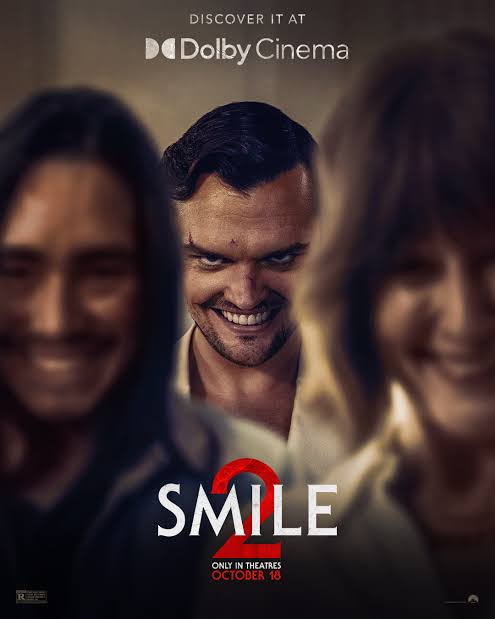
Parker Finn's Smile is explicitly a horror movie about trauma and also loud noises. Smile doesn't create tension as much as it messes with the sound mix so a very quiet scene gets interrupted by OH MY GOD A RINGING TELEPHONE AS PIERCING AS AN AIRHORN or a person's sitting in a doctor's office and HOLY MOLEY A SOUNDTRACK STING WITH STRINGS JUST SHOWED UP AND IT WAS WAY LOUDER THAN YOU'D EXPECT. At one point the movie visits a haunted person's bedroom and the walls are covered in scratchy black drawings of monsters and voids, which is something you should be thrown in jail for filming in the 2020s. I don't even think the worst Saw movie would stoop so low as to include childlike sketches of scary spookies. All of this is in service of a depression and suicide metaphor.
And, look, everything is a metaphor for everything else. Everything is justified by everything and any two things are analogous if you torture yourself long enough. Maybe Dracula is about private home equity, maybe the new Patricia Lockwood poetry collection I'm jonesing so hard to read could be said to metaphorically explore Dom DeLuise's asshole. Your take on Smile could be different than mine. But I don't think so. You google "Smile Parker Finn trauma" and immediately get interviews where he's talking about suicide. It's intentional and it's overt.
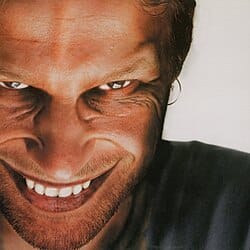
Here's what happens in between the OH MY GOD THAT VACUUM WAS SO LOUD scares of Smile: People are stalked by spirits only they can see, those people do their best to get help, the spirits make them do a Richard D. James Album face and then kill themselves in front of other people. And then those people are doomed to smile and kill themselves in front of others, continuing the game of suicide telephone.
What does that mean about depression and suicide? It's not a stretch to say all these people being chased around by the depression monster should have isolated. Maybe they even should have killed themselves right away. Reaching out for help only leads to you indirectly killing whoever tries to lend a hand. Your depression is contagious, your mental illness a weapon. You should do what the brave characters in zombie movies do and eliminate yourself when you realize you've become a threat. And that works in zombie movies because Romero, etc. didn't treat the undead as avatars of mental illness.
Halfway through Smile, one character brings up inherited mental illness to a character whose mother killed herself. When we saw this years ago, I turned to my wife and said "I really hope this director isn't trying to say something he isn't smart enough to say with his smiling ghost movie." And then I watched ol' Parker Finn trip over his own toes for the next hour. If the allusions to suicide as a contagion were implied, they would be distasteful and I wouldn't much care. Some of the best horror movies are distasteful. But Smile very literally announces its central metaphor and then rides it out to an ending where the protagonist sets herself on fire and dies in front of her ex-boyfriend, damning him. The writing and acting and scares suck, but don't worry, the themes are shit. I'll give the movie one thing and say the monster is legitimately disgusting. I felt revolted, in a good way, when it finally showed itself in Smile's last scene. If you watch the movie on mute, there are three good minutes around the hour-and-forty-minute mark.
In the closing moments of Smile 2, which, again, I haven't seen, a pop star kills herself on stage at an arena concert. In 1994, everybody was worried Kurt Cobain's death would lead to copycat suicides. In 2024, copycat suicides were the stinger in a dogshit horror movie.
Lights Out, from the guy who'd go on to make the Shazam movies, went further and actually had the character suffering from a depression metaphor kill herself to spare her family. Suicide saves the day. What does that mean? Not every story has to be prescriptive, but if you're making a monster movie for Brett Ratner's production company, you probably aren't smart or subversive enough to make "save your family, kill yourself" into a worthwhile piece of art. I don't know, did Luis Buñuel make anything for Brett Ratner?
I wasn't the only person who thought Lights Out was reckless, though I’ll say Sandberg comes off well enough in the interview linked here.
In broad strokes, I've been describing the spectrum of dealing with real stuff in your fiction. You fully explore it with compassion, like Richard Price, you half-ass it but the other half of your ass is good enough I can ignore the weak half, like Texas Chainsaw Massacre (2022) or you fumble it so badly you insult me, like Lights Out and Smile. Some of these explorations are in metaphor and some are direct, and while I think metaphor is an important part of fiction, it's easy to screw up if you don't consider all the implications you're making with your comparison.
I mentioned Green Room up there and the upcoming Jeremy Saulnier movie just got a full trailer yesterday, so I'll end with a good metaphor. Saulnier's made my favorite movie of the year three times, with Blue Ruin, Green Room, and Rebel Ridge. He's good at this stuff.
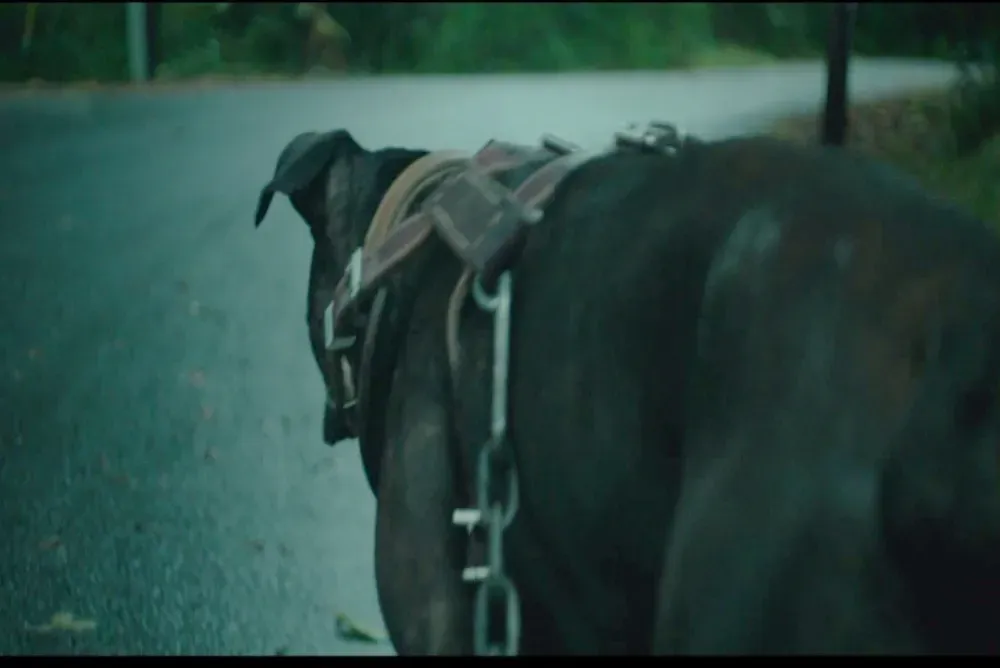
I love this dog in Green Room. The first time we see the dog, a neo-Nazi sics it on an innocent kid and the dog kills the kid horribly. It's visceral, unglamorous gore. I can't imagine any of the Faces of Death fans I wrote about last week enjoying it. And then the dog gets loose and spends something like 15 minutes walking around, until Green Room's final moments, when it finds its dead owner, the one who ordered him to tear a 19-year-old's throat out, and the dog rests its head on his body, ignoring the punks sitting nearby. The punks, worried at the sight of the oncoming attack dog, realize they have nothing to worry about.
I love that scene. What a simple, elegant elucidation of one of Saulnier's pet themes. And what a great pit to put in your audience's stomach. We had to drive 20 minutes outside Philly to see Green Room in theaters back in 2015, and I'd drive 2 hours to see it on the big screen again. I'd buy a theater and a Green Room workprint and establish a Museum of Jeremy Saulnier if I had the funds. The dog is like all of those neo-Nazi kids, because kids aren't inherently violent and bigoted. The big Nazi, Patrick Stewart, just manipulated them into hate. The dog was trained to kill on command. Freed from its reason to kill, the dog wants to mourn its owner. I can hate a person a lot easier than I can hate a dog. You want to squeeze a redemption story down my throat, you do it with an animal. We don't have a lot of Jeremy Saulniers, though. It's mostly a gallery of under-considered trauma out here.