Journalism I return to
I don't want to bum you out, so a content warning that the first and last links here refer to suicide. They’re primarily about empathy, too, but, again, I don't want anybody scrolling down and getting sucker punched.
When I wrote about the movie Primetime, I focused on Luke Dittrich's September 2007 Esquire story "Tonight on Dateline This Man Will Die." Good piece Dittrich put together there. Here are other examples of longform journalism I love, that I think you might get something out of:
- "Jumpers" by Tad Friend for The New Yorker, October 13, 2003
 Tad Friend

Leading off with a heavy one because it ties into something I noted in the Dittrich article. "Jumpers" is about suicide and the Golden Gate Bridge, with a focus on whether building a barrier and/or safety net would curb the number of people who use the thing to kill themselves every year. The evidence shows either addition absolutely would, but people think they'd be too expensive and aesthetically upsetting. The heart of Tad Friend's feature is the well-documented fact that suicide is even more an act of convenience than everything Dittrich discussed, that you make it harder to jump off the Golden Gate and most people wouldn't just try to end their lives with another method. It's natural to assume there's no such thing as true prevention, and fewer suicides on that bridge would only mean a greater number of suicides by other means, but it just isn't true. And yet Friend tracks over 30 years of hostility to the idea of altering the Golden Gate Bridge in any way. It's a fascinating look at the concessions we refuse to make for other people.
- Two articles by Erik Hedegaard
"The Rise and Fall of the Campus Nazi" for Rolling Stone, October 14, 1999
 Erik Hedegaard

Hedegaard wrote about a neo-Nazi college student dork in South Carolina who went by "Davis Wolfgang Hawke." This is the kind of story you might condemn for providing a platform to a bigot— a Rolling Stone feature is far and away the most press Hawke could hope to get at that time— but Hedegaard does a great job documenting his complete failure. You can’t read this and want to know more about the neo-Nazi philosophy. It really is about how these people are all opportunistic, incoherent, name-your-embarrassing-adjective. I won't spoil the full "Fall" promised in the story's title, but Hedegaard discovers the kid's birth name is Britt Greenbaum. Do that math on that one.
"Who Killed the Nazi on Campus?" (alternately titled "The Mysterious Death of a Neo-Nazi Turned Grifter, Bitcoin Millionaire") by Erik Hedegaard for Rolling Stone, July 25, 2021
 Erik Hedegaard
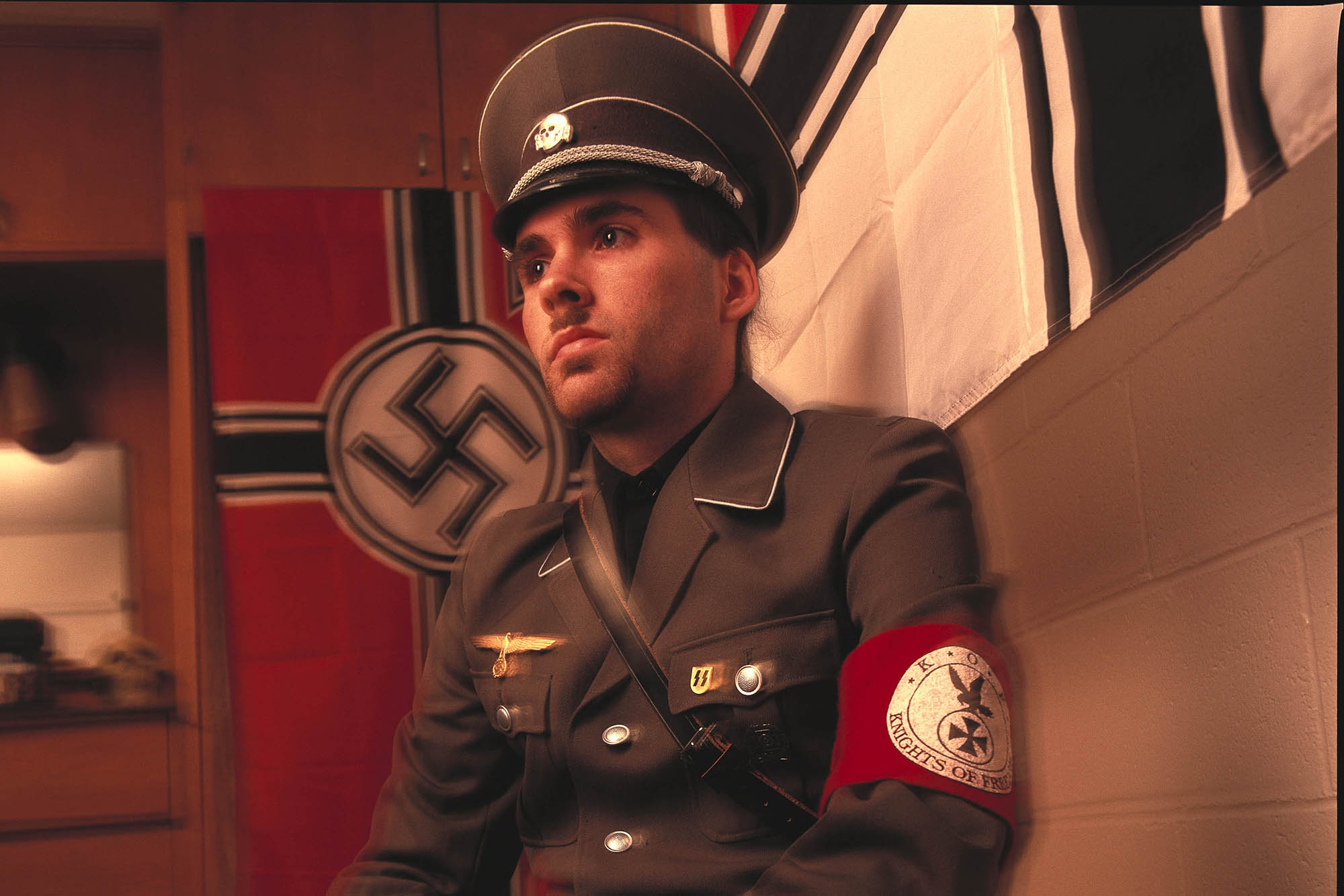
Twenty-two years later, Hedegaard wrote about the unsolved murder of a rock climber in British Columbia who went by "Jesse James." As you've probably put together from the article’s title, James was Hawke was Greenbaum. Humiliated after the total collapse of his would-be Nazi movement in 1999, Hawke made a living running spam schemes on the internet and fully disappeared in 2005, after AOL sued him and won $12.8 million.
In 2017, somebody shot and killed 38-year-old James and then torched both his body and the truck he'd been living in. Even though James was doing the vanlife thing in semi-rural BC, he was a tech savant and had potentially amassed a fortune in bitcoin (it's also possible he was lying). In 2021, James was finally identified as Greenbaum. Hedegaard put together a deeply engaging piece connecting how this pompous 20-year-old Nazi who hated Jews, Blacks and gays became a pompous 38-year-old climber who hated anybody who thought they knew more about quantum mechanics than he did. I'm not going to step on any of that here, but there's a really compelling side-plot about Eva McLennan, who'd been dating James for two years at the time of his murder.
- "Jack Dorsey Has No Clue What He Wants" by Ashley Feinberg for Huffpost, January 17, 2019
 Ashley Feinberg
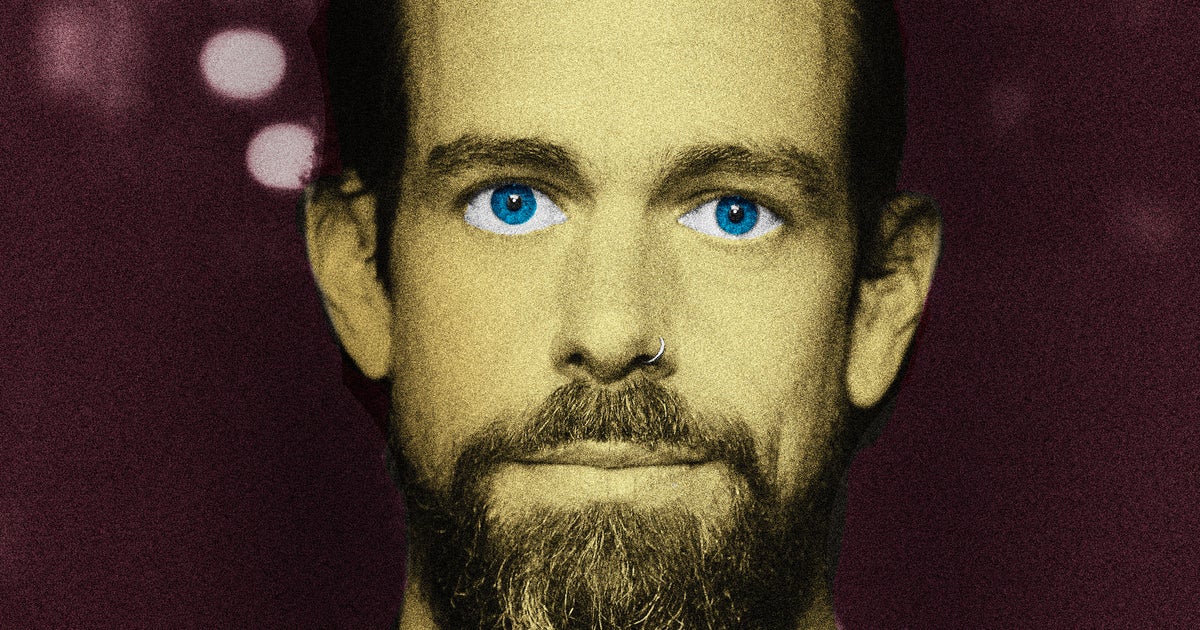
This isn't really longform writing in the same way the other stuff here is– it's mostly a straight interview– but it's too brilliant to not include. A few years ago, Feinberg said she was taking time away from journalism to write a full book about her family's history with suicide, something she's detailed terrifically in shorter essays. I hope that book's still coming.
The Jack Dorsey piece was written when he was still running Twitter and had cultivated this aura as the tech CEO with a nose ring and an off-putting beard. He had tattoos and he wrote shitty poetry before he became a billionaire and he tweeted about intermittent fasting. It's no surprise he eventually became an RFK Jr. supporter, because he was always that guy– very rich and connected and on-the-inside, but working hard to make you think he was a punk rock disruptor.
The interview is great because Feinberg doesn't buy into any of this. She's a bold writer who actually asks for clarification when Dorsey spits up pseudo-intellectual start-up speak. She grills him about re-instating Alex Jones' Twitter account on a bigot's advice and she doesn't let him change the subject until it's clear Dorsey's got nothing going on in his head. As Marc Maron recently said about so many people, Dorsey's got no mindset. He gives all these vague excuses for sucking up to Candace Owens and Feinberg pushes for specificity on every one.
It's hard to drop an excerpt from the conversation because she keeps it flowing so well that most new questions relate directly to what was just said, but here's an example of what I'm talking about:
And what do you mean exactly when you’re talking about the health of the platform?
So it’s this concept of conversational health. So it’s what’s pinned to my profile. We kicked off this initiative to first try to measure the health of conversation. And then second, as we build solutions around it, how do we tell if we’re doing the right work? Because we don’t have a lot of great metrics as to whether the things that we’re doing are working well.
But how do you qualify conversational health?
Well, it’s in the thread. but I’ll describe it as ... We can measure the level of toxicity, for instance, within a conversation. We can measure the level of perspective?
Right, but how? What makes something toxic?
We have algorithms that can determine, based on the network, based on what people are doing elsewhere, based on the number of reports, based on mutes and blocks, whether this is a conversation that you’d want to stay in or you’d want to walk away from. And that doesn’t inform any direct action, but it can inform enforcement actions and whatnot, like when a human has to actually review. So toxicity is one such metric, we call it receptivity. Like, are the members of the conversation receptive to each other? We have variety of perspective as an indicator. We have shared reality.
How do you determine someone’s perspective?
Variety of perspective.
Right.
You have to ... Like, this is all conversations.
Right, but I’m assuming that comes from which people are involved in conversations, or is that not right?
Um, potentially. Right now we’re just trying to determine what the indicators are. Like, temperature on your body — that indicates whether you’re sick or not, right? So if you were to apply the same concept to conversations, what are the indicators of a healthy conversation versus a toxic conversation? That’s what we’re trying to figure out. We did this whole thing with outside researchers and RFP to get external help to determine these indicators. But this is all in the health thread, all the details.
So many of the questions begin with "Right, but..." because this is the rare interview with a super powerful person where the journalist isn't conducting herself like she's both in the room with her subject and auditioning for future interviews with anybody who might read the results.
- "A Darker Shade of Rose" by Buzz Bissinger for Vanity Fair, September 2001
 Buzz Bissinger

Here, Bissinger wrote maybe the most interesting profile I've ever read. I wish it was a book. He profiles a small-time baseball player named Tommy Gioiosa who was mentored and betrayed by Pete Rose, and it's all written with a Nick Tosches-level journalistic poetry.
Baseball's already the only sport I can really follow, but I'm sure I'd find this just as interesting if it was about curling or water polo. The point is what Rose is capable of getting away with as a generational talent in his field. It's the way he's the slimiest slug, an unequivocally bad person, but he's also the MLB's leader in hits, games played, at-bats, singles and outs, a true juggernaut. Bennett Miller could have turned this into a great movie in the vein of Foxcatcher. Maybe you get Scott Smith, author of A Simple Plan (and its adaptation’s screenplay) to write it. And you get Tilda Swinton to play Pete Rose. I know that sounds weird, but I’m fan-casting this thing with sabermetrics.
- "The Untold Story of Otto Warmbier, American Hostage," by Doug Bock Clark for GQ, July 23, 2018
 Doug Bock Clark

Otto Warmbier is the American you probably read about a decade ago, who went on one of those under-the-table tours of North Korea in December 2015, when he was 21, and then he was apprehended at the Pyongyang airport and sentenced to hard labor in January 2016. He was released back to the US in a vegetative state in June 2017. His family had his feeding tube pulled that month. This article is as close to a full account of what actually happened to Warmbier as any of us are ever going to get. Clark is empathetic to everybody in this story and I would be impressed by the way it's written even if gathering all of this information seemed easy. In fact, it seems impossible.
The details in Warmbier's case are obscured to the degree any journalist would be forgiven for not wanting to pursue the story, much less write nearly 10,000 words about it. In situations like this, I think about Bill Bryson's Shakespeare: The World As Stage, which is a 199-page biography where Bryson readily admits up top that we only definitively know about two paragraphs' worth of information about his book's subject. Some situations, we only know 1% of what really happened. Warmbier used a tour company Americans aren’t supposed to able to sign up for in order to tour a totalitarian-run country with almost no communication with the outside world, where he was arrested on unclear charges and put in jail, and then he only reemerged unable to tell anybody how he was brutalized. And then he died. Not a lot of witnesses to interview there. You can’t file a Freedom of Information Act request on whether North Korean prison regulations were properly observed in the lead-up to the poor kid getting permanent brain damage. And yet Clark found a lot and makes a bunch of valuable insights into all of it. If you were going to turn this into a movie, you’d have to get Tilda Swinton to play Otto Warmbier.
- “Depravity Has Found A New Depth” by Megan Koester for Exclusive Content, November 6, 2026
 Megan Koester
This is the most recent and the shortest piece, so I haven’t thought about it as much as something I first read 15 years ago, but it’s heart-hollowing. And the world is so fragmented that if you don’t subscribe to Megan Koester’s Substack, you may not have seen it.
In August, Cheyenne Roundtree wrote a feature for Rolling Stone about Katherine Early McCollough and her relationship with alternative/annoying comedian Reggie Watts. It’s also a terrific piece of journalism worth a read. To do Roundtree’s article a total disservice and summarize all the nuance out of it: Watts was a pseudo-intellectual bozo who brought a middle school kid’s idea of the avant-garde to Amazon Pharmacy brand activations outside Coachella and the James Corden late-night show. Like he’d loop his voice saying nonsense words and that was sort of like being funny. It’s sort of like being funny if you use a delay pedal while singing “squirrel.” That makes you the Tehching Hsieh of people who have participated in Carpool Karaoke. If you close your eyes, it’s almost like The Late, Late Show hired Chris Burden to be James Corden’s sidekick.
Sorry, I’m editorializing. Roundtree doesn’t do that. She discusses Reggie Watts as a druggie guy with cred, who pushed ketamine, etc. on his girlfriend, Katherine McCollough, and then abandoned her when she had severe reactions to the drugs and her psychic implosion harshed his vibes. And then she killed herself and he reacted with deeply abhorrent third eye “I respect your beautiful journey” Instagram reels, didn’t share crucial info with the people who actually cared about McCollough, etc. It’s all indefensible. It’s disgusting, terrifying behavior and it was part of a pattern.
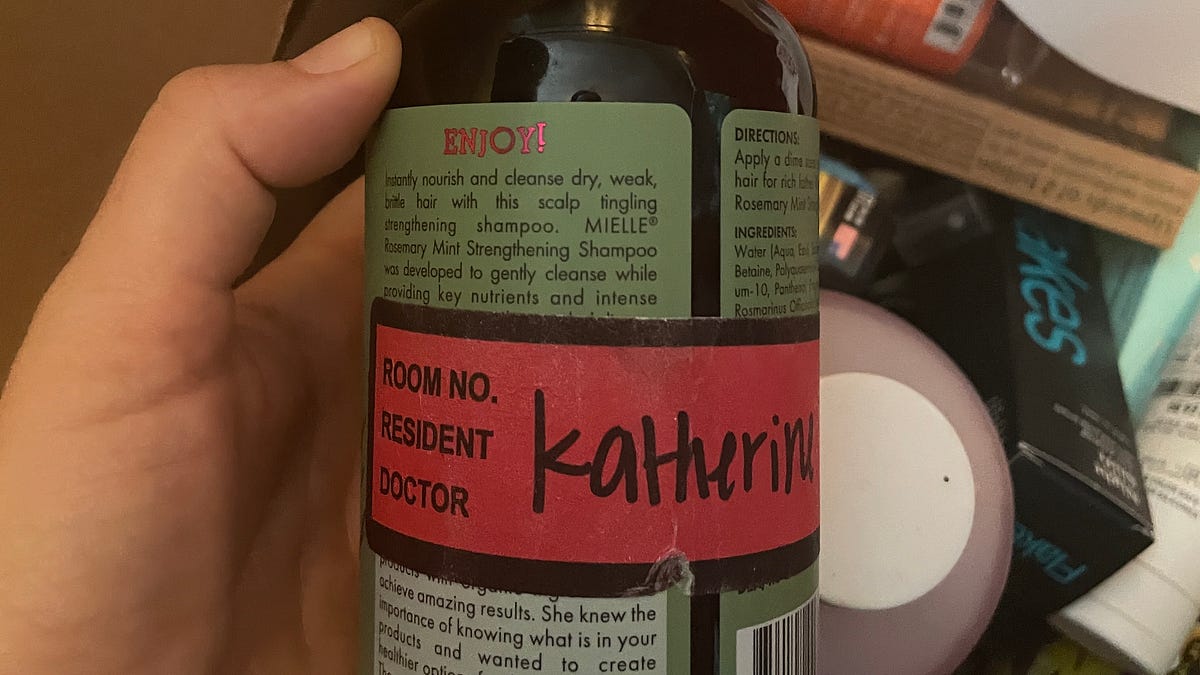
In her piece, published a few months later, Koester attends an estate sale at the home Watts and McCollough shared. Watts, who still hasn’t released any meaningful public statement on any of this, put everything in the house up for sale, seemingly with the intention of renting the spot out. So now he’s becoming the Sonic Arts Union of landlords.
Empathy is the thing I’m most likely to respond to in nonfiction writing. I never shut up about it in this newsletter. The Reggie Watts story is so gutting because he seems to lack empathy. He just does not give a fuck about anybody else while giving himself cover by occasionally sharing abstract ideas that might sound like empathy. Koester’s piece is so moving (and infuriating in its own way) because it brings empathy into Watts’ space. She walks through something like a crime scene and identifies who this once-sparkling person was in a home owned by another person, nominally her partner, who didn’t read the books he cited and was ultimately fine selling a dead woman’s shampoo to strangers. The essay is short but it wouldn’t be an essay if it were any longer. It’d be an impact crater.